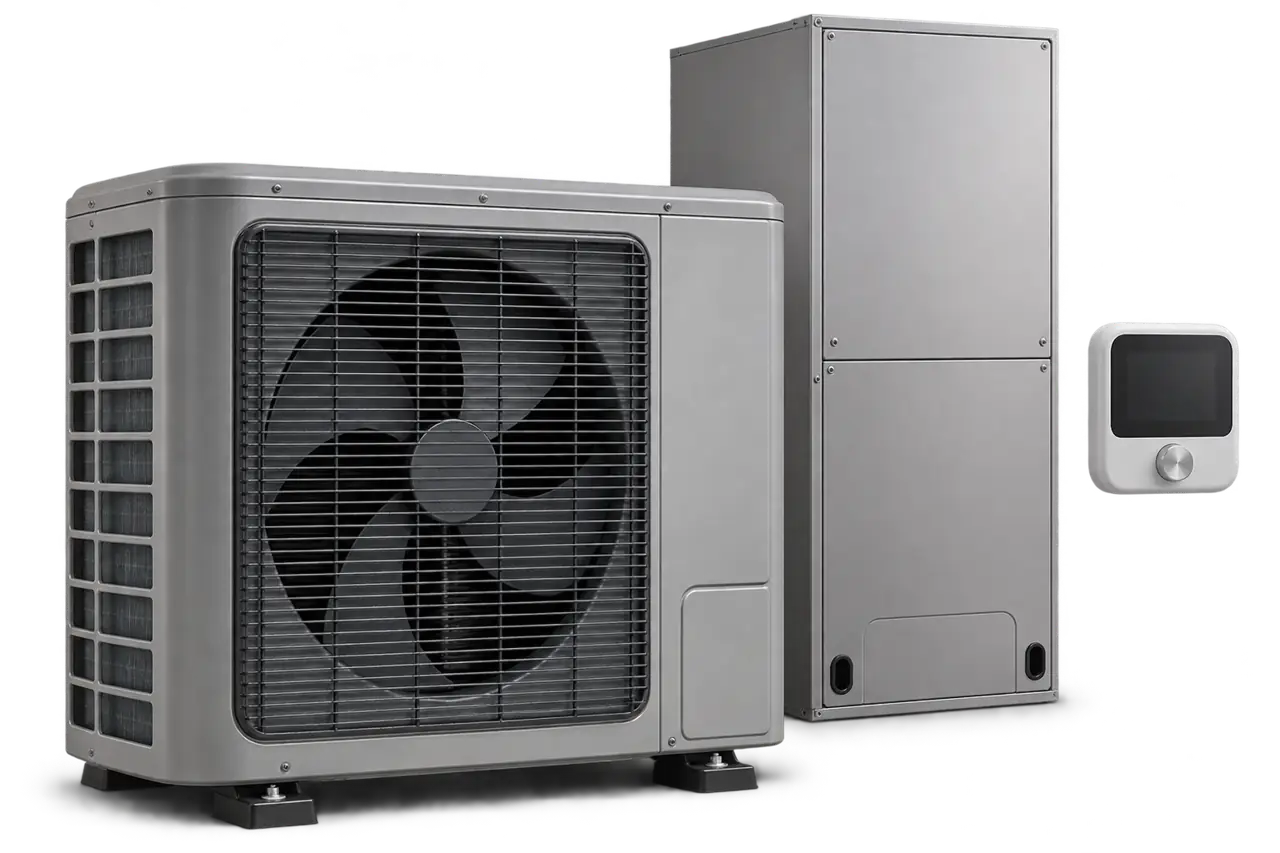
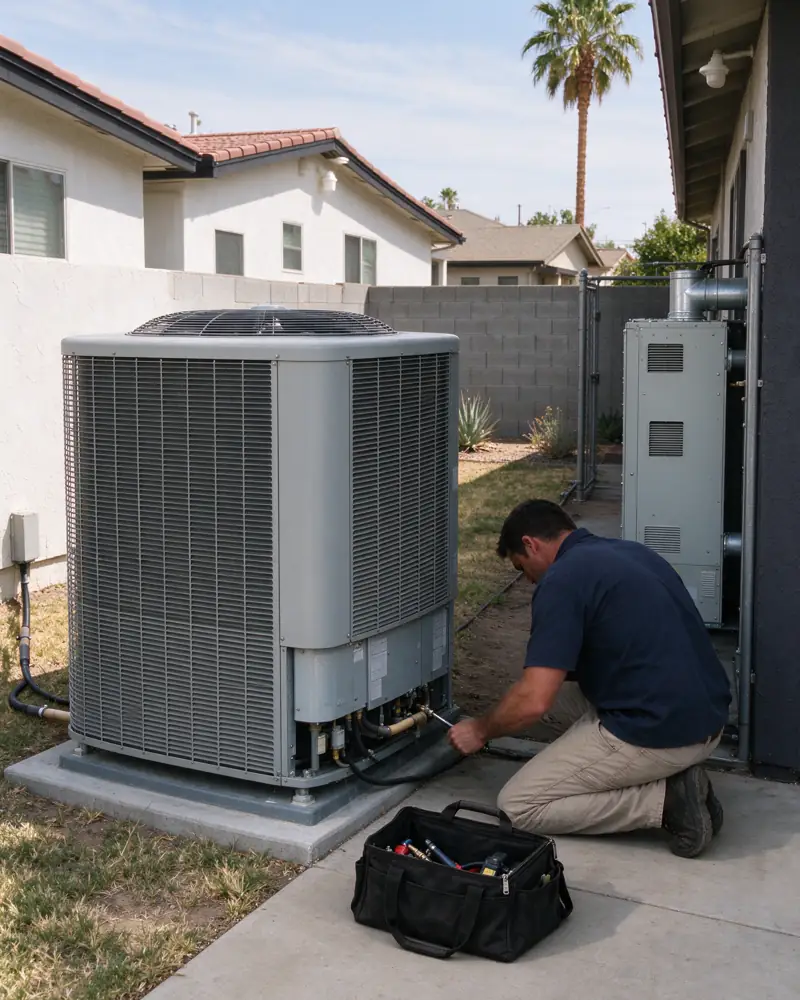
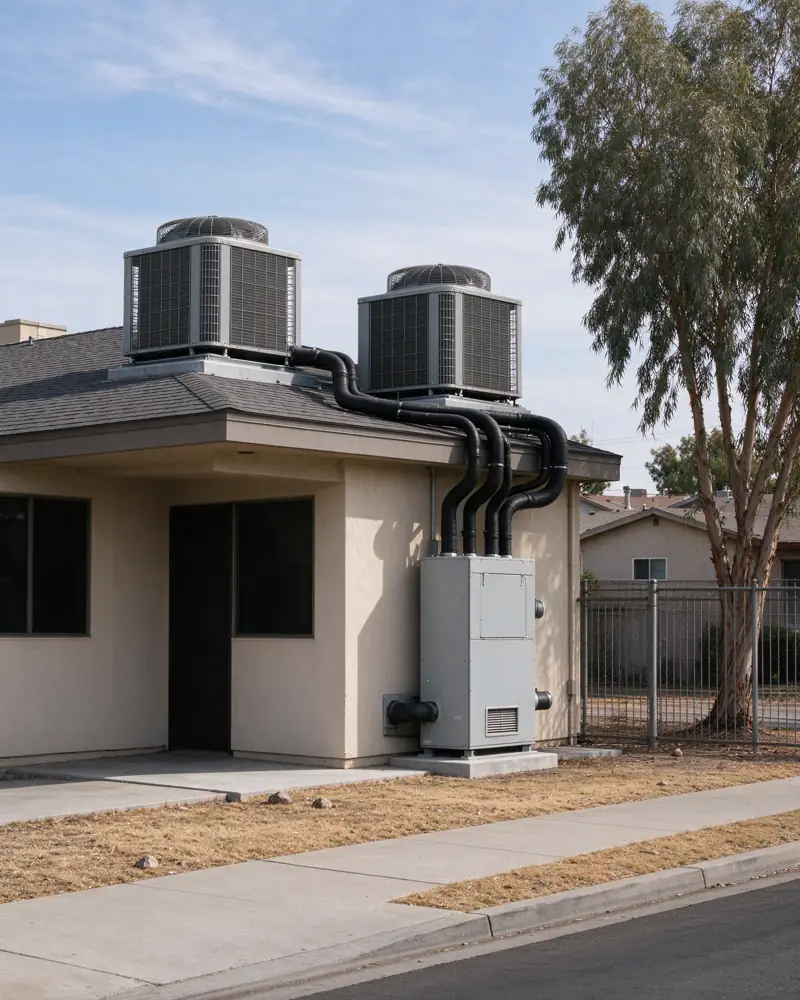
Veranda: heat pump installation in Bakersfield, CA.
We size, install, repair and replace heat pumps around your house, your ducts and Bakersfield summers. You get a written estimate after we have seen the house.
Your heat pump runs, but the house is not getting cooler
It is a hot afternoon: the system runs, the air feels weak or warm, and one room gives up first. Sometimes it stops altogether. Tell us what the thermostat shows and what changed, and we start from there.
What we check on the visit
We confirm what the thermostat is asking for and whether the indoor fan and outdoor unit both answer.
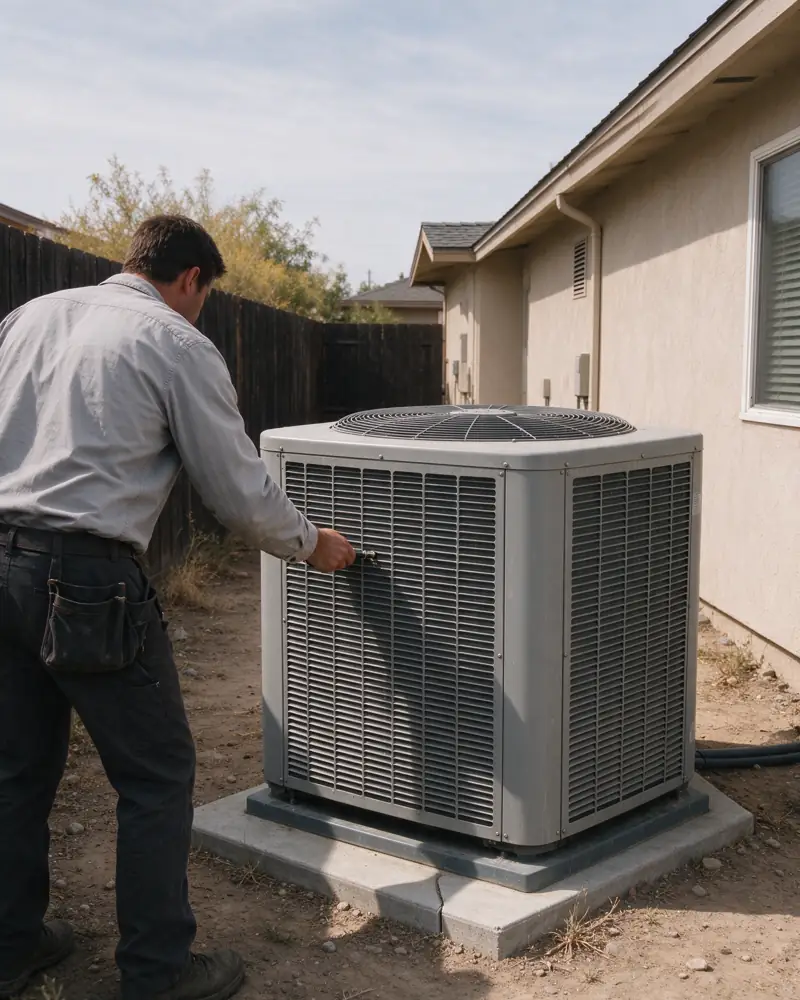
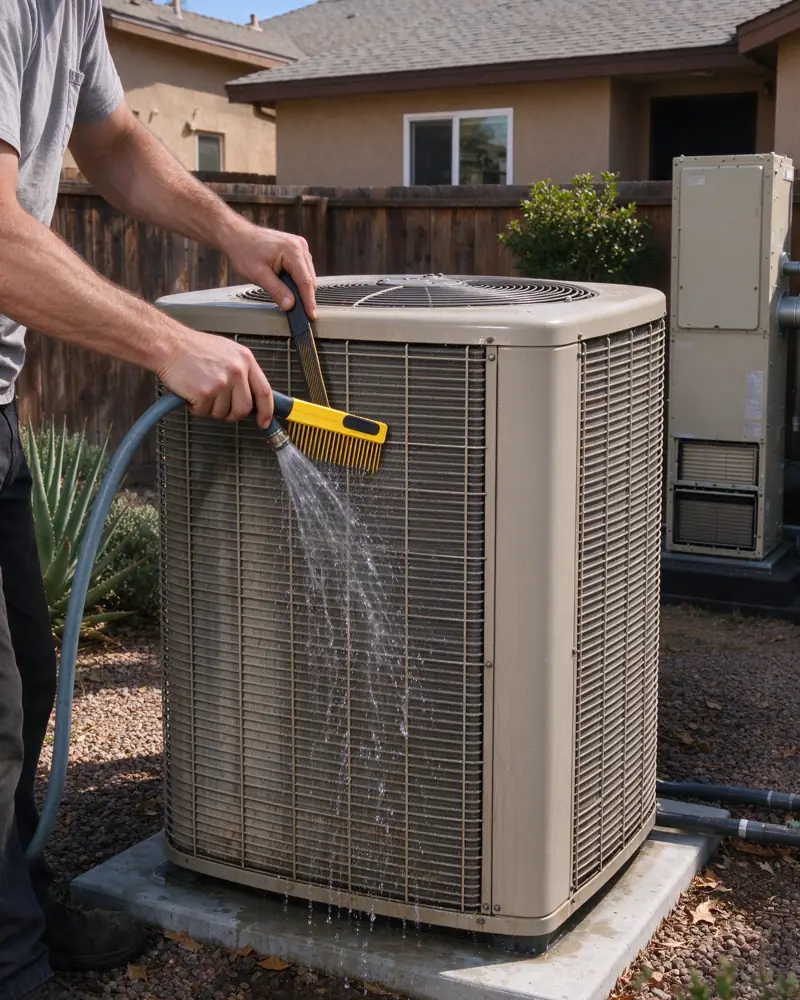
We check the filter, the outdoor coil and the airflow at the registers, because valley dust and a packed coil cause plenty of summer complaints.
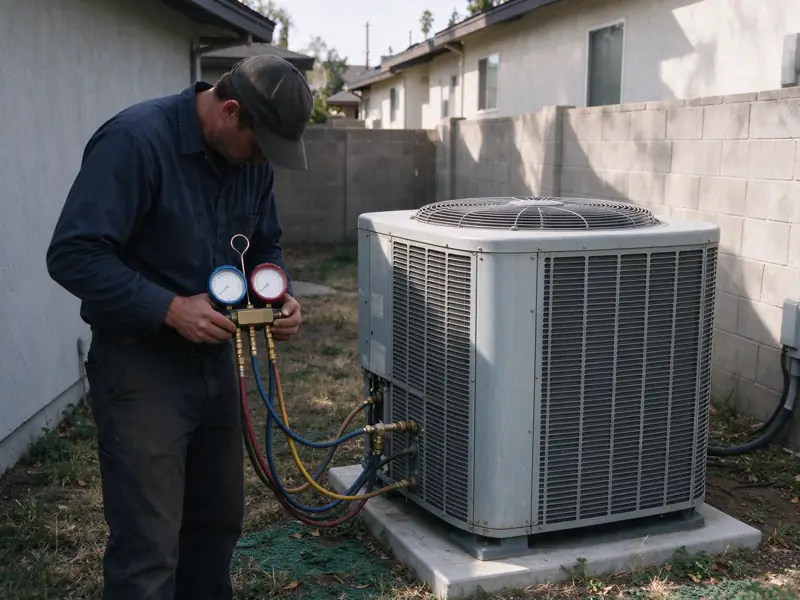
We look at the electrical parts and the refrigerant side once the simple causes are ruled out.
What changes the repair
If the fault is one part, we tell you which part, what it costs to replace and what we expect afterward. If the system has a run of repeated failures or is near the end of its life, we say so and price the repair beside a replacement, so you are comparing two written options rather than guessing.
Before we arrive
Leave the panels on and do not keep restarting a unit that trips. A photo of the outdoor unit label and a note of when the problem started help us bring the right parts.
What we check first in a Bakersfield summer
We check the usual summer causes first: a packed outdoor coil, a capacitor or contactor worn out by weeks of long run times, or a blocked drain that trips the float switch. They are quick to confirm and quick to fix.
Nothing gets replaced until we have told you what we found and what it costs.
A heat pump that sat through a dusty fall and a mild winter often meets its first 105-degree week with a clogged coil and a tired filter. A maintenance visit in spring catches that before the house heats up.
What the visit covers
We clean or check the outdoor coil and clear debris around the unit.
We check the filter size and fit, the condensate drain and the indoor coil where we can reach it.
We measure how the system is running and note anything that is drifting.
You get a written note of what we found, what we did and anything that needs a separate repair.
What changes the plan
Maintenance is cleaning, checking and adjusting. If we find a failing part, we price that repair separately and you decide; it is never folded into the visit without asking. Older systems with a history of problems may need a longer look, and we tell you before we start.
If your unit sits near a field or dirt alley
Units beside a dirt alley, a field or a busy road load up faster. If yours sits in one of those spots, we suggest how often to clean the coil based on what we see, not a fixed schedule.
Heat mode and filters
We also run the system in heat mode, so the reversing valve and defrost controls are checked before winter rather than on the first cold morning. We show you the right filter size and how often to change it for the way you use the house.
A new heat pump only works as well as the house and ducts let it. If the back bedroom stays hot every afternoon, a bigger unit will not fix it. We size the system around your rooms, your ducts and the way the house takes on Bakersfield heat.
What we do before we quote
We walk the house with you and note which rooms struggle and when.
We work out the cooling and heating load from the house itself: size, windows, insulation and orientation.
We check the ducts in the attic, the return air path, the electrical panel and where the outdoor unit can sit with room to breathe.
What changes the price
Equipment size and efficiency, duct repairs or new runs, panel or circuit work, attic access and permit fees all move the number. We list each one in the written estimate, so you can see what is included and what is optional.
Where the outdoor unit goes
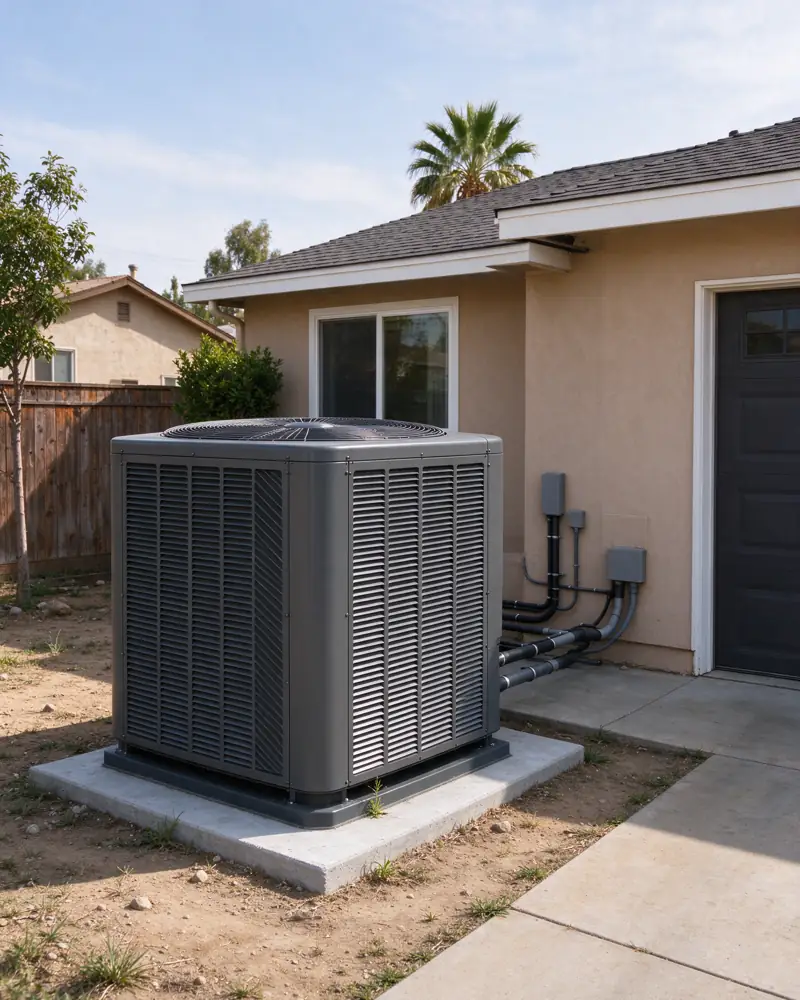
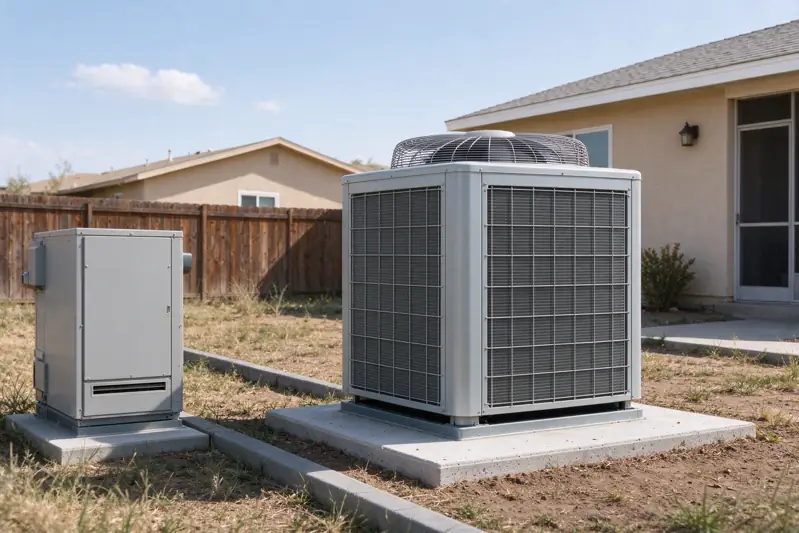
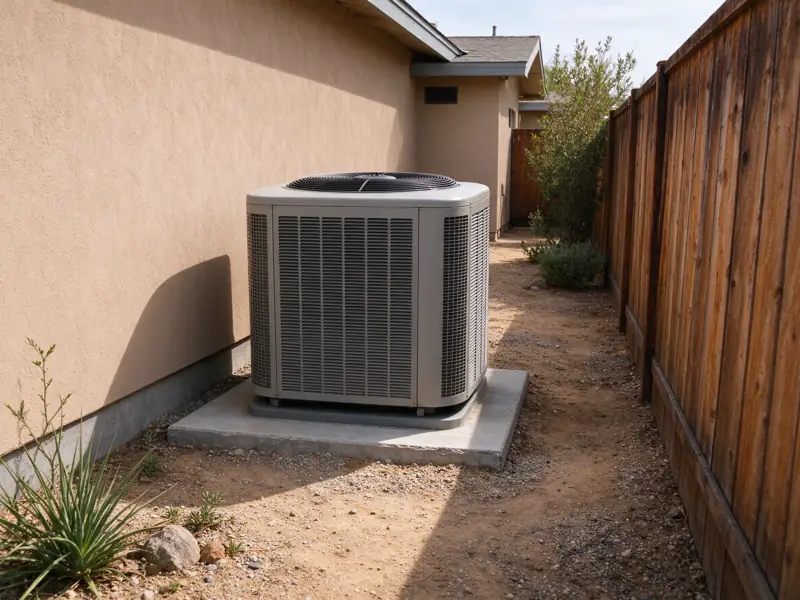
Side yards here often push the outdoor unit against a hot west wall or under a dryer vent. We place it with clear space around it, out of the worst afternoon sun where the lot allows, and where it can be serviced later.
What the written estimate shows
Equipment model numbers, the size and why we chose it, duct and electrical work, the permit, removal of the old system and what startup includes. If two options make sense, we price both side by side.
We look at what failed, how old the equipment is, what has already been repaired and whether the next failure is close behind. If a repair makes sense, we price it.
If the system is near the end, we price a replacement alongside it so you can compare two written options. The repair-or-replace guide shows the questions we work through and how age and repair history weigh in. Either way, the choice is yours.
The details you notice help us find the fault faster. Is it one room or the whole house? Does the outdoor unit run? Did the problem start in the afternoon heat, after a power cut or after recent service?
Note what the thermostat shows and any noise or smell, and leave the panels on; we take it from there. Photos of the equipment labels help us bring the right parts. The symptoms guide lists the common signs and what each one usually points to.
A dirty filter cuts airflow and makes the system work harder, so it is the first thing to check. A new filter that does not fix weak airflow points to something else: a blocked coil, a duct problem or a failing fan.
Use the filter size the system was designed for; a more restrictive filter is not automatically better. The filter article shows how to check yours and when to call us instead of changing it again. If a new filter turns gray within weeks, tell us; a leaky return can pull in attic dust.
Once a year is a good baseline, ideally in spring before the heat arrives. Units beside a field, a dirt alley or a busy road load up with dust faster and may need the coil cleaned more often. Between visits, change the filter on schedule and keep plants and debris clear of the outdoor unit.
We follow the manufacturer’s instructions for your model, and the maintenance guide turns them into a simple calendar you can keep by the thermostat. Write the date of each filter change on the box so you know where you are.
Temperature is only half of comfort. If rooms feel cool but sticky, or one room never feels right, the system may be moving air too fast, short-cycling or pulling from a leaky return. We measure airflow and look at how the system cycles before suggesting new equipment.
A bigger unit usually makes clamminess worse, not better; correct airflow and, where it fits the budget, variable-speed equipment are the usual answers. The comfort guide explains what each symptom points to. Sometimes the fix is as simple as a fan speed setting.
A new heat pump is several decisions at once: the size, the indoor and outdoor equipment, the ducts, the controls and the electrical work that ties them together. In Bakersfield the summer decides most of it, so we start with the rooms that struggle on hot afternoons and work back to the equipment.
Our installation guide walks through each decision in the order we make it on a site visit, so you know what we are checking and why before the estimate arrives.
Clearances come from the installation instructions for your model.
Keeping the outdoor unit quiet and easy to service
Placement affects noise, airflow, service access and drainage. We keep clear space around the unit, keep it away from bedroom windows where we can, give the condensate somewhere to drain, and set it where a technician can reach every panel.
Narrow side yards and HOA rules sometimes limit the choices, and if a neighbor’s window is close, we say so up front. We show you the options before we set the pad. The placement guide explains the clearances and how to keep the unit quiet.
The outdoor unit and the indoor air handler or coil are rated as a pair. A mismatched pair can run, but not at the capacity or efficiency on the label. Our estimates list both model numbers and the combination they form, so you can check it against the manufacturer’s ratings.
If we keep an existing indoor coil, we say why and what it means for performance. The matching guide shows where to find those numbers on your equipment. They are on the metal plate inside the indoor cabinet door and on the side of the outdoor unit.
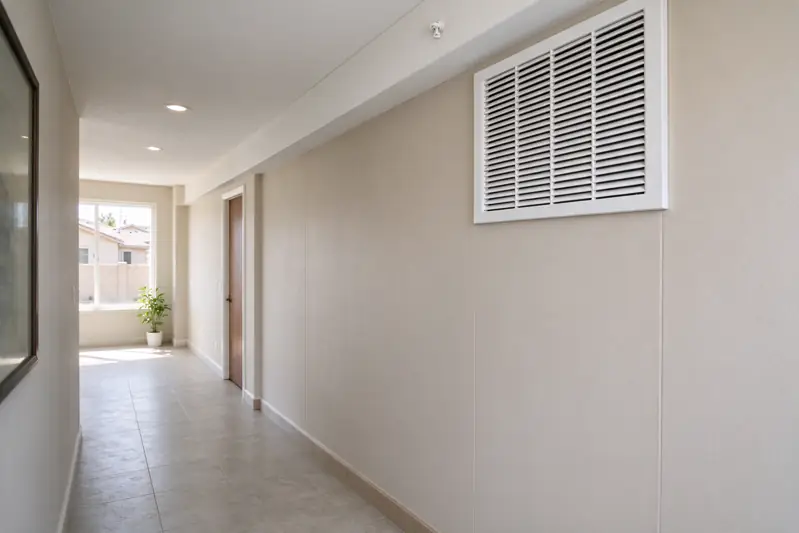
A new heat pump cannot fix a crushed duct, a leaky joint in a hot attic or a return that is too small. We test airflow at the registers and look at the duct runs before we recommend equipment, because a duct repair is often cheaper than a bigger unit and works better.
If one room is always behind, that is where we start. The ductwork guide shows the common duct problems and how each one is fixed. A duct fix is priced on its own line, so you can see it.
Three jobs, three different reasons the price landed where it did.
Ducted replacement in Rosedale
Where
Rosedale, CA
Property
1,700 sq ft single-story ranch, attic air handler, ducts in the attic
Job
Ducted replacement
Price
$11,000
Time on site
1 day on site
Permit
Permit and inspection for the Rosedale address
The problem
The system still ran, but the west bedrooms sat several degrees warmer than the hallway on summer afternoons, and the last two summers each brought a repair.
What we decided
The load check showed the existing size was right, and the duct test found one crushed supply run to the west bedrooms. We replaced the equipment like for like and replaced that one duct run instead of upsizing.
Matched 3-ton heat pump and attic air handler
One new insulated supply run to the west bedrooms
New pad, disconnect check, thermostat set-up
Permit and inspection
The result
The west bedrooms now hold within a degree or two of the rest of the house, with the same size equipment the home had before.
1,300 sq ft 1950s house, furnace in the hall closet, AC condenser in the side yard
Job
Furnace and AC conversion
Price
$12,400
Time on site
2 days on site
Permit
Permit and inspection for the Oildale address
The problem
The AC was failing and the furnace was close behind. The owners wanted one system and no more gas appliance in the hall closet.
What we decided
The panel had room for the new 240-volt circuit, so no panel upgrade was needed. The ducts were sound apart from a loose return connection, so we kept them.
Day 1, morning
Remove the furnace and old condenser, cap the gas line and protect the hall.
Day 1, afternoon
Set the air handler in the closet and the heat pump on a new pad.
Day 2, morning
Run the new circuit, connect refrigerant lines and seal the return.
Day 2, afternoon
Start the system, check airflow and heating mode, walk the owners through the thermostat.
The result
One electric system now heats and cools the house, the closet no longer holds a gas appliance, and the job stayed in the lower half of our conversion range because the panel had room.
2,100 sq ft single-story home, attic air handler, one small central return
Job
Replacement with airflow fix
Price
$14,200
Time on site
2 days on site
Permit
Permit and inspection for the Shafter address
The problem
The old unit ran almost all day in summer and the house still felt stuffy. The owners assumed they needed a bigger system.
What we decided
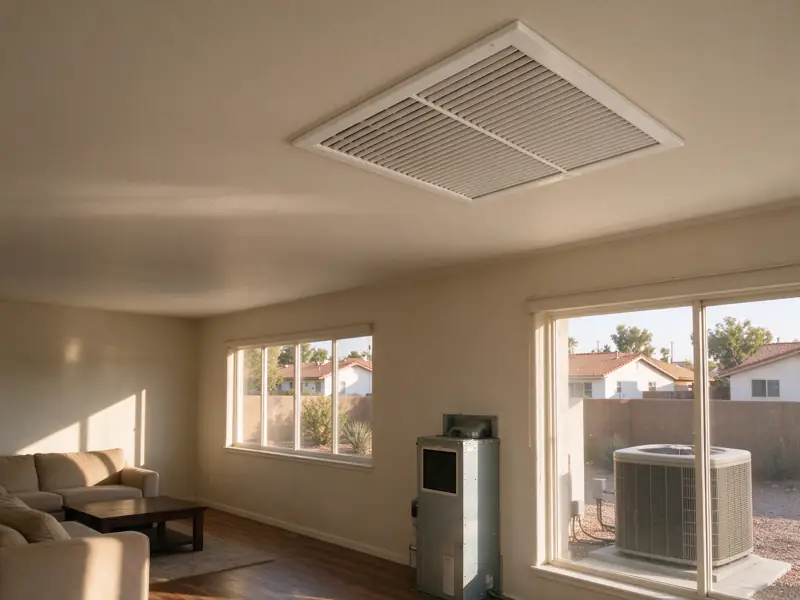
The equipment size was right; the house could not breathe. One small return grille was starving the system of air. We replaced the worn unit with the same size and added a second return.
What the owners saw
Runs nonstop, house still warm
Owners expected to upsize
Stuffy back half of the house
What we did about it
Second return added, so the system moves the air it was sized for
Same 4-ton size kept after the load check
New return in the hallway serving the bedrooms
The result
The new system cycles off on summer afternoons and the back of the house no longer feels closed in. The second return is what moved this job toward the top of our replacement range.
Both ranges on one scale. Your written estimate sets your price.
Heat pump replacement
When the old system is worn out, not just broken
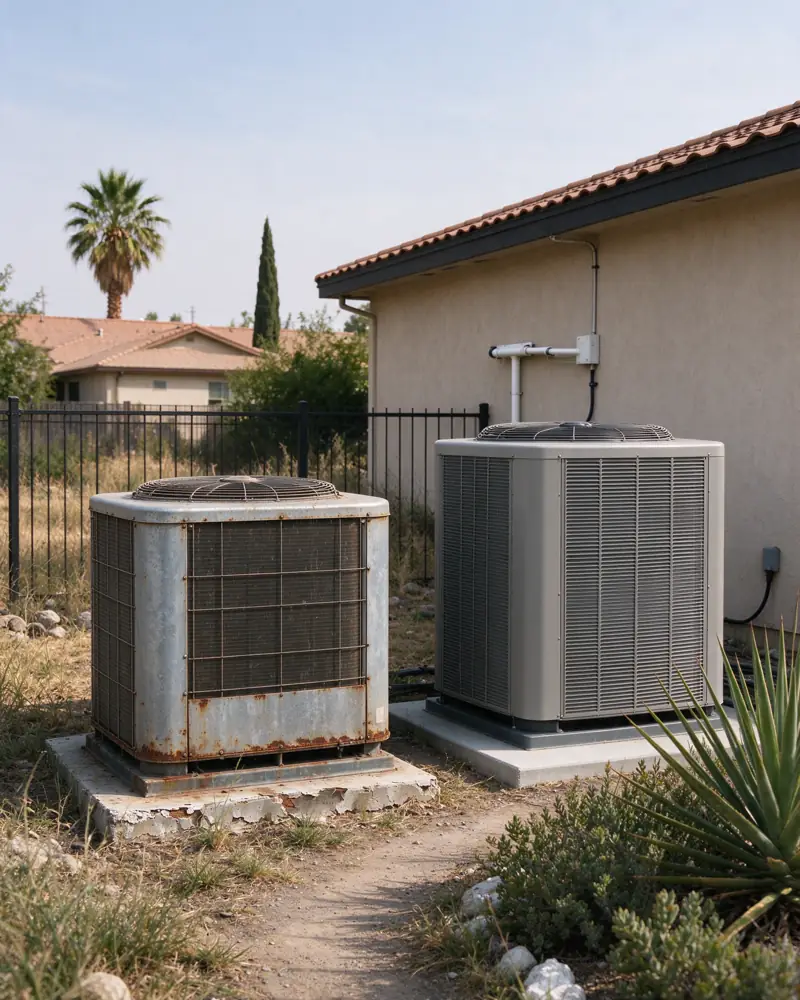
Twelve-plus summers of Bakersfield heat wear a system down. When repairs keep coming back or a major part fails on an older unit, replacing it is often the better money. Veranda’s typical range for a like-for-like ducted replacement is $6,500 to $15,500.
What sets your price inside that range
The low end is a straightforward swap: same location, ducts and panel in good shape, easy attic access. The top end adds larger or higher-efficiency equipment, duct sections that need replacing, electrical work and harder access. We price your house after the site visit and put it in writing.
What we check before we replace anything
We look at the ducts, the return, the electrical supply and the outdoor pad, so the new system is not held back by an old problem. If the ducts are the real issue, we tell you, even when that changes what you buy.
What the written estimate shows
The equipment model numbers and size, removal and disposal of the old system, any duct, pad or electrical work, the permit and the startup checks. Optional upgrades are listed separately, so you can see the price without them.
Keeping the house livable during the swap
We plan the work so the house is without cooling for as short a time as possible, protect floors and the attic hatch area, and tell you before we start how long we expect to be on site and which rooms we need to reach.
If your AC is old and the furnace is not far behind, one heat pump can take over both jobs. In a Bakersfield winter it rarely has to work hard to heat the house. Veranda’s typical range for a furnace-and-AC conversion is $8,000 to $15,500.
What the conversion involves
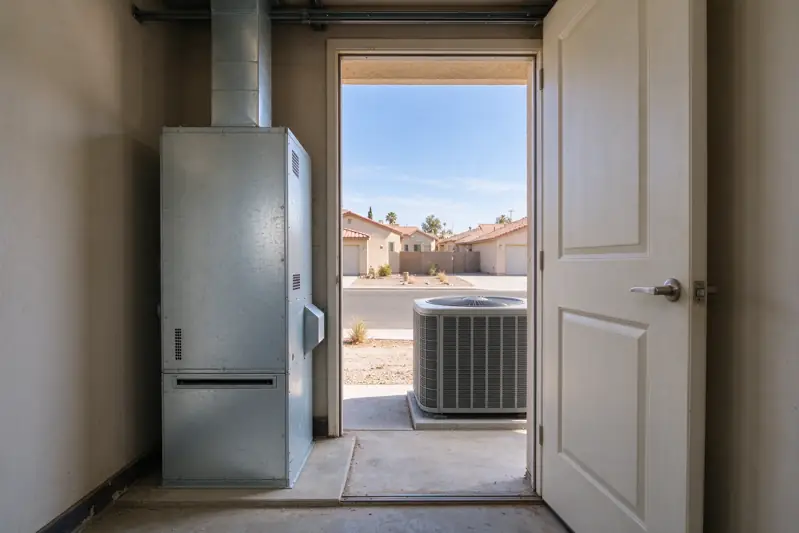
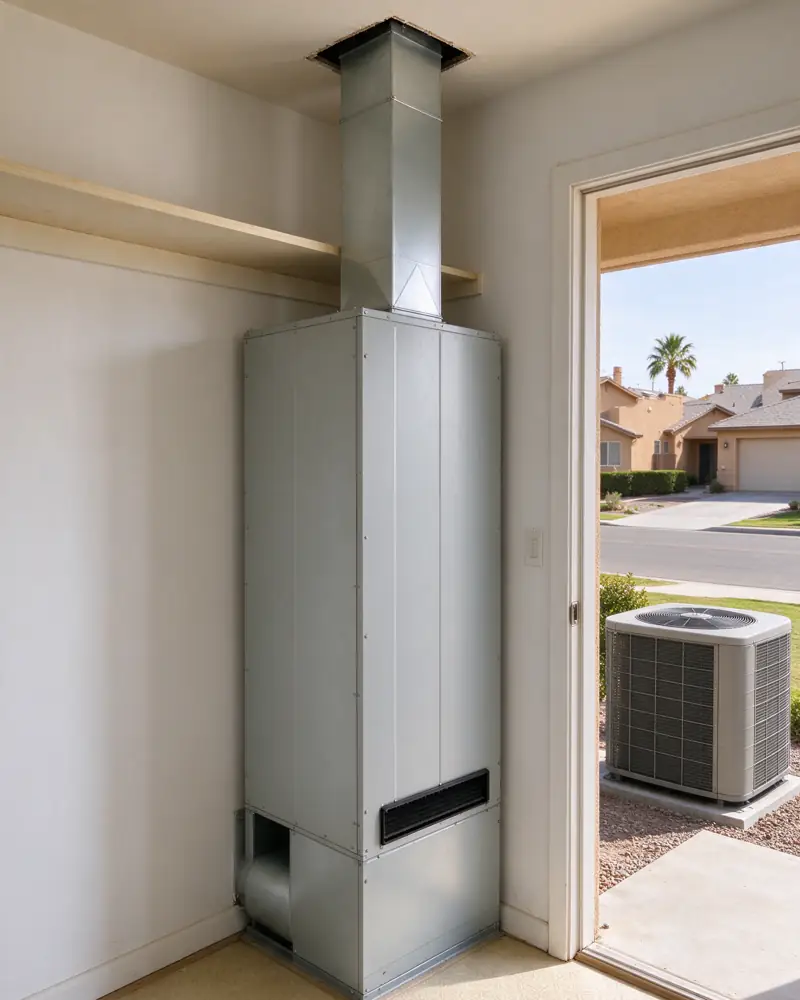
We remove the furnace and old outdoor unit, set a matched heat pump and air handler, and connect it to your existing ducts where they are sound.
The air handler needs a 240-volt circuit, so we check your electrical panel for space and capacity on the first visit.
The gas line to the old furnace is capped, and the thermostat is replaced or set up for heat pump operation.
What moves the price
Panel capacity is the big one: a panel with room for the new circuit keeps the job near the lower end, while a panel upgrade pushes it up. Duct condition, where the air handler can go and whether you keep the gas line for other appliances also matter. All of it is itemised in the written estimate.
Winter with a heat pump
Bakersfield winters are mild, and a heat pump handles the cold mornings comfortably. You give up the furnace and keep one system for both seasons, with one thermostat and one service visit a year.
Rebates and incentives
Incentive programs change and depend on your address, utility and equipment. We tell you what we know applies when we visit, and we never count a rebate in your price until it is approved.
Veranda’s typical range for a like-for-like ducted replacement is $6,500 to $15,500, and $8,000 to $15,500 for a furnace-and-AC conversion. Where your house lands depends on equipment size and efficiency, duct work, electrical work, access and the permit.
Optional upgrades are listed separately in the estimate, so you can see the price with and without them. We price your house after the site visit, and the cost guide breaks each driver down with typical budgets for three common jobs. Nothing in the price is hidden.
A few things make the replacement estimate faster and more accurate: photos of the outdoor and indoor unit labels, the rooms that never feel comfortable, any recent repairs, and how to reach the attic or closet where the indoor unit sits.
With those, we arrive with the right questions and quote the whole job rather than a guess. The replacement checklist puts everything on one page, with a column for what we confirm on the visit. If the indoor unit is in a tight attic, a photo of the hatch helps too.
Two quotes for the same house can differ by thousands because they cover different work. Line them up item by item: equipment model numbers, size, duct and electrical work, the permit, removal of the old system, startup checks and what is excluded. A lower total often leaves something out.
Our estimates list each of those items, so they are easy to compare with anyone else’s. The quote comparison article has a side-by-side sheet you can fill in. Bring it to the site visit and we will go through ours with you.
Bring your address, what you want to change, photos of the equipment labels, recent repair history and any rooms that never feel right. Add your budget and timing if you have them.
You do not need to open anything up; photos of what you can see safely are enough. The preparation article has a one-page brief you can fill in and send before we arrive. If you cannot get photos, we look at everything on site.
Both give you heating and cooling. A furnace and AC split the job between gas and electric; a heat pump does both with one outdoor unit.
We price both when they make sense for your house, list what stays, what gets replaced and what changes in the electrical panel, and show how each one runs through a year. The comparison guide lays the two side by side so you can weigh the price, the running cost and what you keep.
If your furnace is young and your AC is not, we say so.
When we convert a furnace and AC to a heat pump, the furnace and old outdoor unit go, a matched air handler and heat pump go in, and the gas line to the furnace is capped.
What stays depends on your house: sound ducts usually stay, and a panel with room for a new circuit keeps the cost down. The conversion guide covers each step, what changes in the closet or attic, and how the system heats on a cold valley morning.
A dual-fuel setup pairs a heat pump with your existing gas furnace: the heat pump handles cooling and most heating, and the furnace takes over on the coldest mornings. It can make sense when the furnace is much newer than the AC.
We check the furnace’s age and condition, the controls needed to switch between them and the cost against a full conversion. The dual-fuel guide explains how the switchover works and when it pays to keep the furnace. If the furnace is near the end of its life, a full conversion usually wins.
Incentives for heat pumps depend on your address, your utility, the equipment and each program’s current funding, and they change often. We tell you what we know applies when we visit, and we never count a rebate in your price until it is approved.
The incentives guide lists the programs worth checking for your address and how to confirm eligibility before you sign. Bring any program letters you already have to the site visit. When a program does apply, we show it on its own line, so you can see your price with and without it.
Running cost depends on your electric rate, the efficiency of the system, how well the house holds its temperature and how you set the thermostat. In Bakersfield, summer cooling is most of the bill, so efficiency at high temperatures matters most.
We compare options using your actual rate and usage when you can share a bill, so the numbers fit your house rather than a national average. The running-cost guide and comparison tool let you change those assumptions and watch the yearly cost move.
Often, yes. We test them for leaks, size and airflow before we quote. If they are sound, they stay; if a run is crushed or too small, we price that fix separately so you can see it.
Will the indoor unit change too?
Usually. The indoor and outdoor units are rated as a pair, so we replace them together and list both model numbers in the estimate. If keeping the indoor unit makes sense, we tell you why.
What do I send before an estimate?
Your address, what you want to change, photos of the equipment labels and any recent repair history. That way we arrive with the right questions.
Do you handle repairs as well as installs?
Yes. We repair, maintain and replace heat pumps, convert furnace-and-AC systems and take emergency calls.
Is a bigger unit always better?
No. We size the system to your house. An oversized unit cycles on and off, leaves the house clammy and will not fix a duct problem.
Can a heat pump replace both my furnace and AC?
Yes. One heat pump heats and cools. We check your panel, ducts and controls to price the conversion.
Are the prices on this page a quote?
No. They are our typical ranges. You get a written estimate for your house after the site visit.
Do you do commercial work?
Yes. Tell us about the building, the equipment and the hours it is occupied, and we plan the job around them.
How soon can you come for an emergency?
Call us. We tell you on the phone when we can get there and what to do in the meantime.
Do you work outside Bakersfield?
Yes: Oildale, Rosedale, Lamont, Shafter, Arvin and Wasco. Give us your address and we confirm.
Where would your job land in our range?
Where your job is likely to land
$6,500$15,500
Lower part of our range.Nothing ticked: a straightforward swap with ducts and panel in good shape.
Each item you tick is something we check on the site visit. Your written estimate sets the actual number.
A single-story Bakersfield ranch. Where the equipment sits varies by house.
Outdoor unit
Placed with clearance for airflow, service access and condensate.
Refrigerant lines
Sized, routed and insulated between the outdoor and indoor equipment.
Indoor air handler
Matched to the outdoor unit and set where it can be serviced.
Supply and return ducts
Carry air to the rooms and back; restrictions limit what any unit can do.
Thermostat and controls
Tell the system when to heat, cool and run the fan.
Emergency heat pump repair
The system stopped and the house is heating up
A dead heat pump in July is not something to wait on, especially with older family members, babies or pets at home. Call us, tell us what happened and we tell you when we can get there and what to do in the meantime.
What to tell us when you call
Whether anything runs at all: the indoor fan, the outdoor unit, the thermostat screen.
Whether the breaker tripped, and whether it trips again.
Any burning smell, buzzing or water where it does not belong.
Your address and the best number to reach you.
What happens next
We find the cause first and fix what is safe to fix on the spot. If the repair needs a part we do not carry, we tell you how long that takes and what we can do to get some cooling back in the meantime. If replacement makes more sense, we price it separately and you choose.
While you wait
Close the blinds on the west side, run ceiling fans and keep people and pets in the coolest room. If anyone feels unwell in the heat, call 911 first.
After the repair
Once the system is running, we tell you whether the fault is likely to come back. If a bigger repair or a replacement is coming, we price it now so you can plan it on a cooler day instead of during the next breakdown.
Offices and shops that need to stay open while we work
A small office, a clinic or a retail space cannot shut for a week while the equipment is changed. We plan commercial heat pump work around your hours, your people and the parts of the building that have to keep running.
What we plan with you
We list the existing equipment, the zones it serves and the hours the building is occupied.
We agree who signs off on the work and who needs to know when each area is affected.
We sequence the job so the most important spaces lose cooling for the shortest time.
What changes the scope
Rooftop or ground-level equipment, crane or lift access, the number of zones, controls that tie into other systems and the permit path all shape the job. Commercial work is quoted on its own; residential ranges do not apply.
What we check on site
The existing units, their age and the zones they serve.
Electrical service, disconnects and controls in each zone.
Roof or pad access, and whether a lift or crane is needed.
What you get in writing
A proposal with the equipment for each zone, the work sequence, the days and hours we will be on site, which areas are affected when, and the permit path for your building.
Rooftop units that wear out together
Many small commercial buildings here run rooftop units that wear out together after years of valley summers. We help you replace them in a planned order rather than one emergency at a time.
Call us with what happened, your address and whether anyone at home is vulnerable to heat. Turn the system off if the breaker keeps tripping or you smell burning. Close the west-facing blinds, run ceiling fans and keep everyone in the coolest room while you wait.
We tell you on the phone when we can get there. The emergency guide has a short checklist to keep by the thermostat for the next heat wave, so nobody has to think about it in the moment.
For a commercial building, we start with how it runs: the hours it is occupied, which spaces cannot lose cooling, who signs off on the work and how we reach the equipment. That plan shapes the equipment choice as much as the load does.
We put it in writing so everyone knows which areas are affected and when. The commercial planning guide lists what we ask for before the first site visit, including the equipment list and recent service records. The more we know before the visit, the shorter the visit is.
Commercial replacements are planned around the people in the building. We list the existing units and the zones they serve, agree the work hours with you, and sequence the job so critical spaces lose cooling for the shortest time, including access to the roof or mechanical room.
Residential price ranges do not apply here; we quote each commercial job on its own scope. The commercial replacement article covers the questions we settle before a schedule is set. Then we put the plan in writing before any equipment is ordered.
Heat pump installation and replacement need a permit and an inspection, and the office that issues it depends on where the house sits, not just the mailing address. We check the address before the permit is filed, so the right office handles it and the inspection is booked against the right job.
The permit is included in our written estimate, so it never shows up later as a surprise. The permit guide explains what gets inspected and when. Ask us about your address and we tell you on the phone.
We size from the house, not the square footage. Windows, insulation, attic temperature, air leaks and the way the house faces all change how much heat it takes on in July. We run a load calculation for your address, then match equipment whose rated capacity at Bakersfield summer temperatures covers it.
If an addition or new windows changed the house since the last system went in, tell us; it often changes the answer. The sizing guide shows the numbers we use and how to read them.
Yes, when it is sized and installed for Bakersfield summers. A heat pump cools exactly like an air conditioner; what matters is its capacity at our outdoor temperatures, the duct system and the airflow across the indoor coil.
We check the manufacturer’s performance data at local summer temperatures, not just the nameplate tonnage, and we look for the rooms and ducts that lose the most in the afternoon. The summer guide explains how to read that data in a proposal.
A system that is right for the house holds the setting through the hottest stretch of the day.
Not always. We check your panel’s open spaces and capacity on the first visit.
If the panel has room, the job stays simpler and closer to the low end of our range; a full or older panel may need an upgrade, and we tell you before you commit. The electrical guide explains the circuits involved and why we look at the panel before we choose equipment.
A single-stage heat pump runs at full speed or not at all. A variable-speed system slows down to match the load, which evens out temperatures and handles humidity better, at a higher price. In Bakersfield, where the system runs hard for months, the difference shows on long afternoons and in the bill.
We price both when they fit the house and explain what you gain. The variable-speed guide compares how each one behaves through a summer day. Neither is right for every house; your rooms and budget decide.
Heat pump thermostats show more than a temperature: auxiliary heat, emergency heat, defrost and staging. When we install a system, we set the thermostat for heat pump operation and show you what each mode means.
If a message appears, or the system behaves differently after a thermostat change, tell us what the screen says; it often points straight at the cause. The controls guide explains each setting and which ones to leave alone in a Bakersfield winter.
Most of the year, a heat pump here never needs its backup heat at all.
Startup is part of the job, not an afterthought. Before we leave, we check the refrigerant charge, the airflow across the indoor coil, the condensate drain, heating and cooling modes and the thermostat settings, and we write down what we measured. You get those readings with your paperwork, which makes later service easier.
If anything is off at startup, we fix it before we call the job done. The commissioning guide lists each check and why it matters. Keep that sheet with the manuals.