Start with the people in the house
A dead heat pump in a Bakersfield July is more than an inconvenience. Inside a closed single-story house, the temperature climbs fast once the cooling stops, especially in rooms against a west wall. Babies, older relatives, anyone who is ill and pets feel it first.
Before you think about the equipment, look around:
- If someone is struggling, call 911.
- If everyone is fine, move them to the coolest room, usually one on the north or east side, and keep water close.
Then work through the steps below and call Veranda Bakersfield Heat Pumps for emergency heat pump repair.
Five safe checks before you call
These take a few minutes and none of them mean opening the equipment.
- Look at the thermostat. Is it set to Cool (or Heat), with a setpoint below (or above) the room temperature? Is the display blank? Replace the batteries if it has them.
- Check the filter. A filter packed with valley dust can starve the system of air. If it is clogged, swap it for the same size.
- Look at the outdoor unit from the yard. Is the fan turning? Is there ice on the coil or the copper line? Is something blocking it? Do not reach inside.
- Look for water. Water near the indoor unit can mean the drain has backed up and a safety switch has shut the system off.
- Switch it off. If it still will not run, or it runs but blows warm air, set the thermostat to Off. A system that keeps trying to start can damage itself.
For more detail on what each symptom points to, our repair symptoms guide lists the safe observations and what we diagnose.
How do you keep the house bearable while you wait?
On a 105-degree afternoon, the goal is to slow the heat coming in.
Block the sun
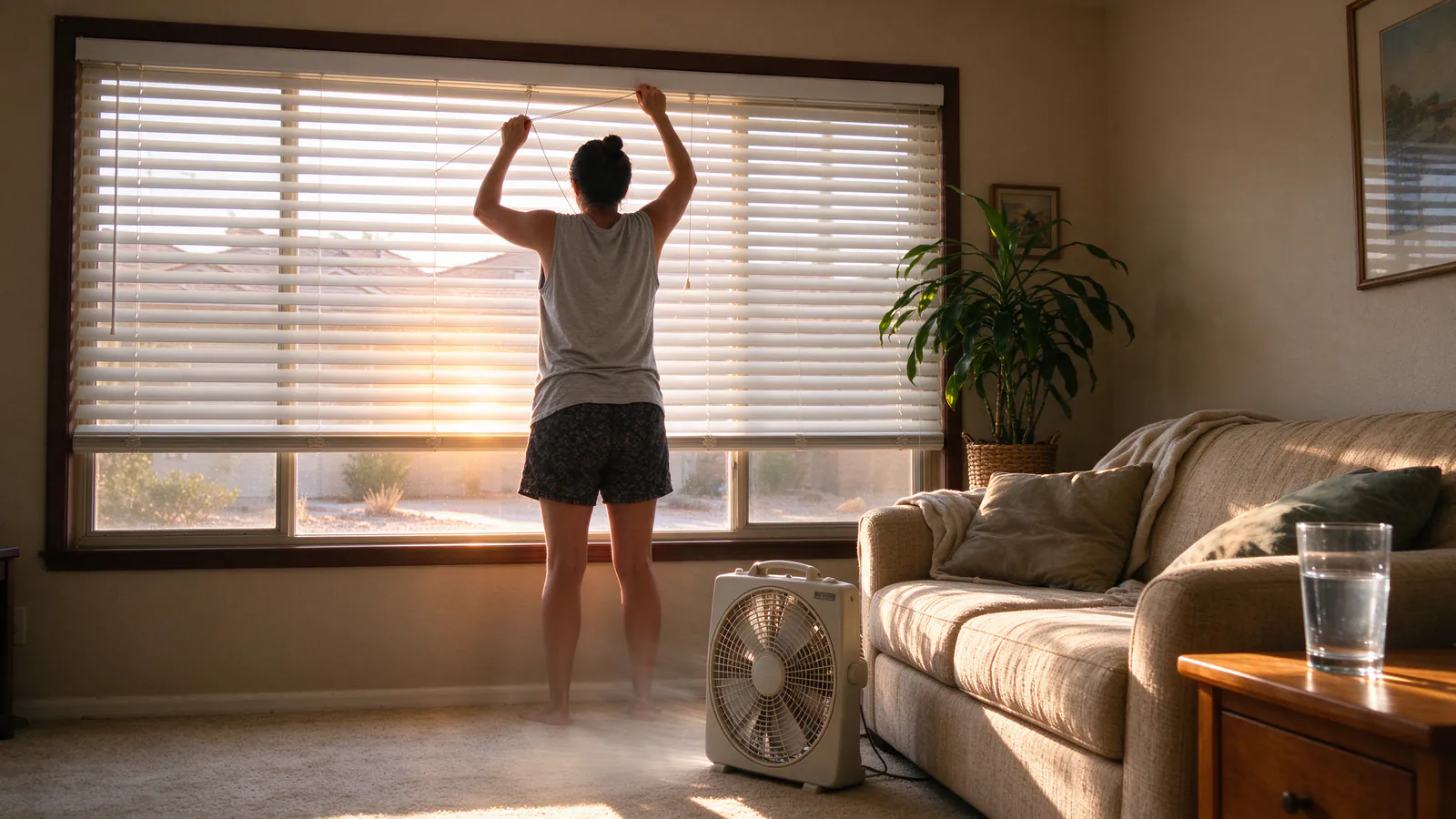
Close blinds and curtains on the west and south sides, where the afternoon sun hits hardest. Shut doors to rooms you are not using so the coolest air stays where people are.
Move the air
Ceiling fans and portable fans help people feel cooler, even if they do not lower the room temperature. Point them at people, not at empty rooms.
Cut the heat you make
Hold off on the oven, dryer and dishwasher until evening. Switch off lights and electronics you do not need.
Use the cooler hours
After the sun drops and the outdoor air falls below the indoor temperature, open windows on opposite sides of the house to pull cooler air through. Close up again in the morning before the heat builds.
If staying home is not safe during a long heat wave, go somewhere cool, such as a family member’s house or an air-conditioned public building.
On a cold morning instead
If the heat pump stops on a cold, foggy winter morning, the risk is lower but still real for some people. Set the thermostat to emergency heat if the outdoor unit has stopped but the air handler still runs; that runs the backup strips alone.
Our guide to auxiliary heat and thermostat controls explains the setting. Use extra blankets and layers, and never heat the house with a gas oven or an outdoor grill.
What to tell us when you call
A clear description helps us plan the visit and tell you the right things to do before we arrive. Have these ready:
| What we ask | Why it helps |
|---|---|
| Your address and the nearest cross street | Tells us where the visit is and how to plan the route |
| Who is in the house, and whether anyone is struggling | Lets us talk through keeping people safe while you wait |
| What happened, and when | Separates a sudden stop from a slow decline |
| What the thermostat shows | Narrows down controls versus equipment |
| Any sound, smell, ice, water or tripped breaker | Points us to the likely part of the system |
| The brand and model on the outdoor label, if you can read it from outside | Helps us bring the right parts |
| Access notes: gate codes, dogs, side yard locks | Lets us reach the equipment once we arrive |
Outside business hours we take emergency calls only. Our contact page lists the ways to reach us. When you reach us, we tell you on the phone when we can get there and what to do in the meantime.
What happens when we arrive?
We find the cause first. We test the parts behind the panels, check the electrical supply and refrigerant readings, and look at airflow. Then we tell you what failed and what it costs, and nothing is replaced before you agree.
If the system is older and the repair is large, we lay out the choice between repairing and replacing. Our repair or replace guide covers how to weigh it, and heat pump replacement explains how a like-for-like swap works.
Can you lower the odds of a breakdown?
Not every failure can be prevented, but dust and heat put the most strain on the parts that stop a system in summer. A spring maintenance visit cleans the coil and tests the capacitor, contactor and drain before the first heat wave.
Our maintenance checklist shows what you can do between visits, and the maintenance planner helps you set a schedule. Save our number now so you are not searching for it on the hottest day of the year: (661) 269-7726.