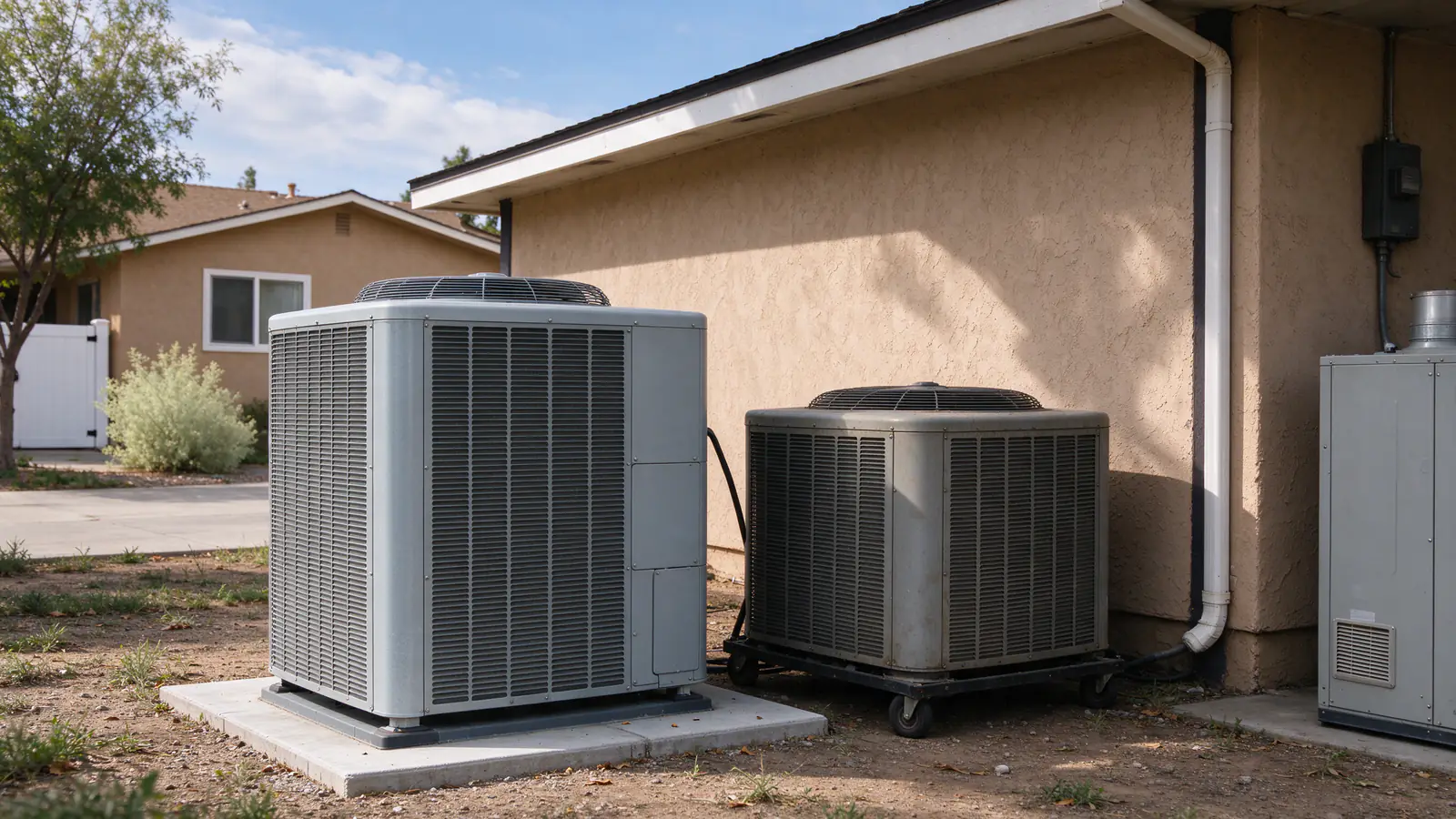
When the old system is worn out, not just broken
Twelve-plus Bakersfield summers wear a heat pump down, and the repairs start coming closer together. Veranda Bakersfield Heat Pumps replaces the worn outdoor unit and air handler on the ducts you already have, sized for the house rather than the old nameplate.
The compressor has run long afternoons for years, and the outdoor coil has taken in valley dust every fall. When a major part fails on an older system, or the third repair in two summers is on the table, a swap is often better money than another fix.
What does a like-for-like replacement cost?
Veranda’s typical range for a like-for-like ducted heat pump replacement is $6,500 to $15,500. The number for your house comes in a written estimate after the site visit, never over the phone.
Like-for-like means the new system goes where the old one was, on the same ducts, pad location and circuit wherever those test sound. That is what keeps a swap inside this range, and the cost guide breaks down each driver.
What we check before we price the swap
We start with the rooms and the old system’s history, then test whether the parts that stay can carry a new system:
- What the old system has been through. Its age, the repairs so far, and the rooms that fall behind on a hot afternoon or never feel right in winter.
- Whether the old size was right. A load calculation from the house itself, its windows, insulation and attic, checks the old nameplate instead of copying it. Often the answer is the same size, as it was in Rosedale.
- The ducts the new system inherits. We look for crushed or leaking runs in the attic, measure airflow at the registers and make sure the return is big enough. A new system on a starved duct run still leaves that room warm.
- The circuit and disconnect already in place. We confirm they suit the new equipment, or list what has to change.
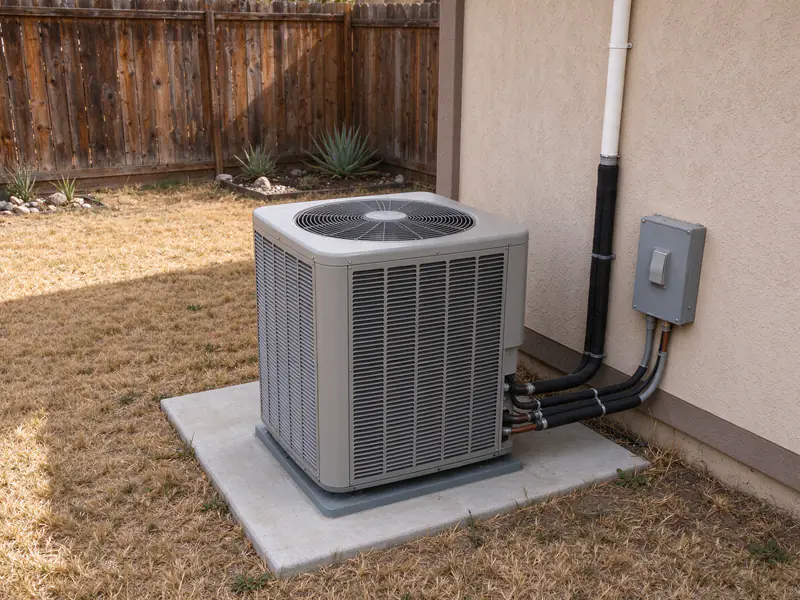
- The pad, line set and drain. We decide what can be reused, and whether the old spot puts the unit against a hot west wall or under a dryer vent.
If the old equipment was never the real problem, we tell you, even when that changes what you buy. The repair-or-replace guide explains how we weigh a repair against a swap, and the repair-or-replace tool lets you run your own numbers first. If one part failed on a system in good shape, start with heat pump repair.
Why we change both halves together
Your heat pump is an outdoor unit and an indoor air handler or coil, rated as a pair. A new outdoor unit bolted to a twelve-year-old coil runs, but it never reaches the capacity and efficiency on its label.
The old coil is also often the next part to fail, so our replacements change both halves, and the estimate names both model numbers. If keeping the indoor side genuinely makes sense for your house, we say so and explain what it means for performance. The matching guide shows where those numbers live on your equipment.
What moves your price inside the range?
The low end is a straight swap: same location, sound ducts, a circuit that already suits the equipment, and an easy attic. These push it toward the top:
| What we find on the visit | How it changes the swap |
|---|---|
| A bigger house that needs more capacity | The load calculation sets the size, and more tons cost more |
| You choose a higher-efficiency or variable-speed model | The equipment costs more and runs quieter and steadier |
| A crushed or leaking supply run | New insulated duct in a hot attic, as at the Rosedale house |
| A return too small for the airflow | A second or larger return, as in the Shafter job on our homepage |
| A tired disconnect or circuit | Electrical work listed on its own line |
| A roof-mounted unit, tight attic or narrow side yard | More labor to get the old system out and the new one in |
Extras you might want, such as a better filter cabinet, are priced separately, so you can see the total with and without them.
How long will the house be without cooling?
A straight swap can be done in a day: the Rosedale replacement profiled on this page took one day on site. Duct or electrical work adds time, and we tell you how many days to expect before we start.
On the day itself:
- The refrigerant is recovered before anything is disconnected.
- Floors are covered on the way to the attic hatch or hall closet.
- The old equipment comes out and the new system goes in on the same visit wherever the scope allows.
- The old units leave with us.
Tell us before the day which rooms we need to reach and how the attic is accessed. The replacement checklist lists what helps us get it right the first time.
What your replacement estimate lists
Each line maps to one part of the swap, so you can hold it up against any other estimate:
- Both halves of the new system by model number, with the size and the reason for it
- Taking out and disposing of the old units and their refrigerant
- Whatever duct, return, pad or electrical work the visit turned up
- The permit and inspection for your address
- Thermostat and control setup
- The startup checks and the readings we leave you
Rebates hinge on your address, your utility, the equipment chosen and whether a program still has funding. We say what we know applies at the visit, and a rebate only comes off your price once it is approved, shown on its own line.
After the new system starts
We measure before we leave: refrigerant charge, airflow across the indoor coil, the condensate drain, heating, cooling and the thermostat. Those numbers go in your paperwork and give every later service visit a starting point.
We also show you the thermostat, the right filter and how often to change it, and what a spring maintenance visit covers. If the old system has just quit and you are still deciding, an emergency repair can get cooling back while you compare options.