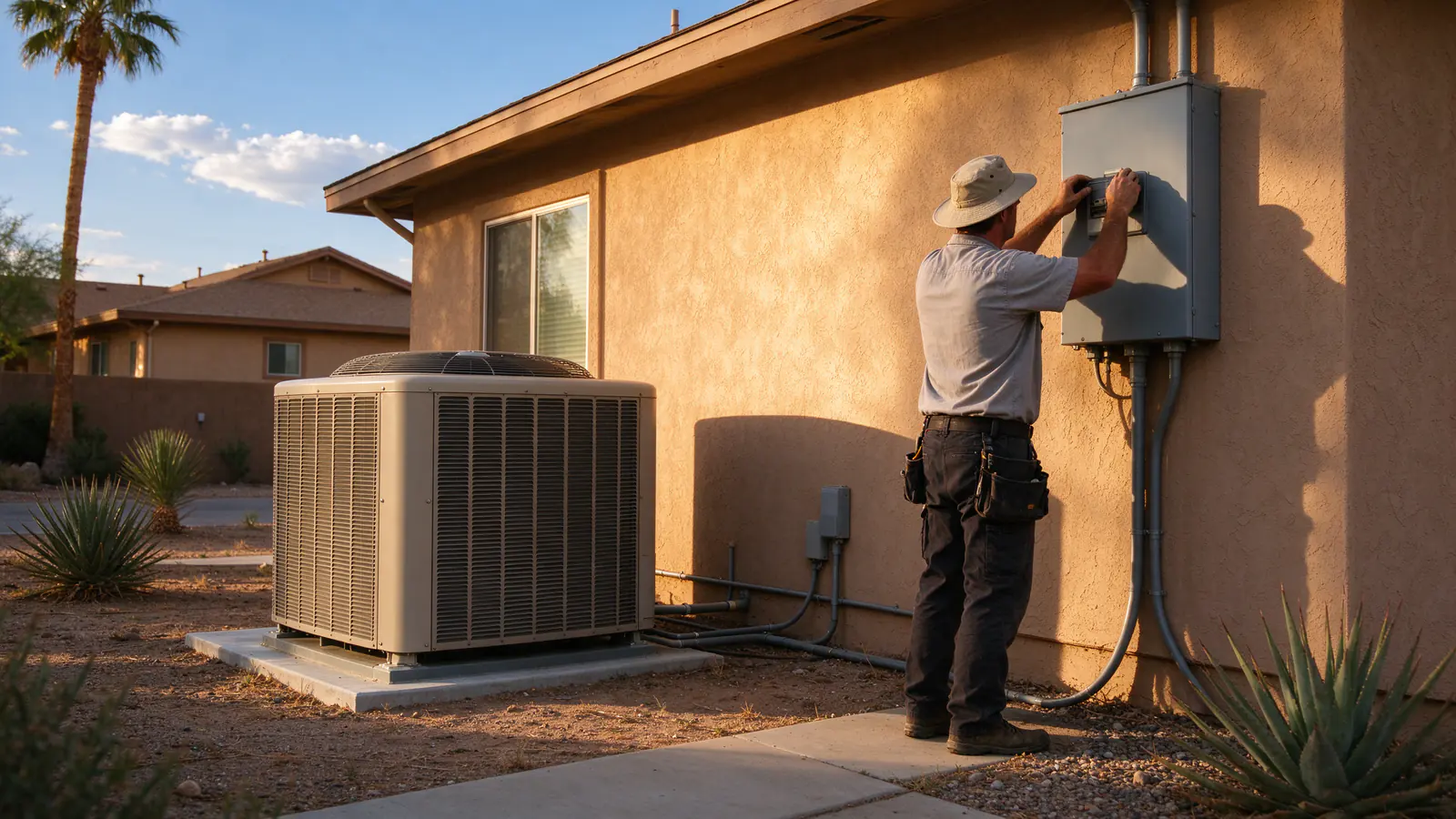
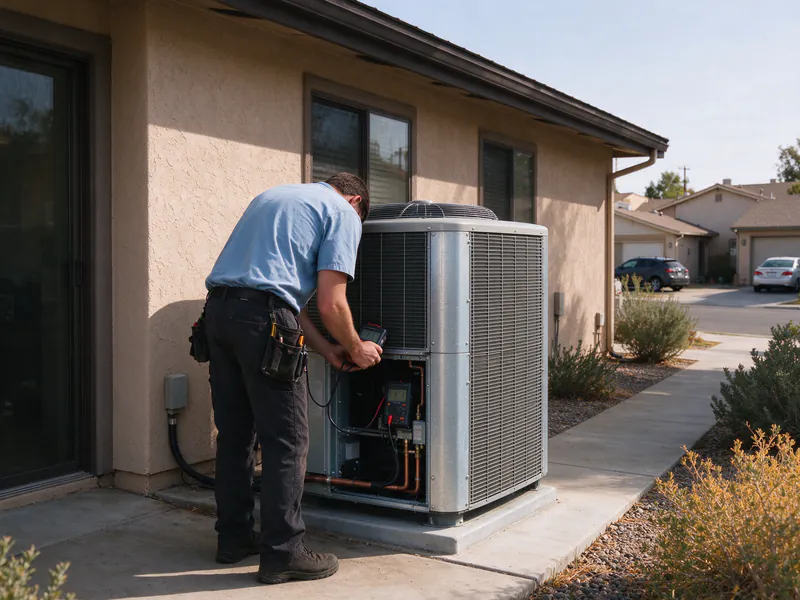
The system stopped and the house is heating up
A dead heat pump on a July afternoon is not something to wait on. Bakersfield heat builds fast in a closed house, and babies, older relatives and pets feel it first. Call Veranda Bakersfield Heat Pumps and we tell you when we can get there.
Maybe the outdoor unit is silent, or it hums and the fan never spins, or the breaker keeps tripping while the rooms climb a degree at a time. Our contact page has the number, and on the phone we tell you what to do in the meantime.
What to tell us when you call
A few details on the phone help us bring the right parts and tell you what is safe to do:
- Whether anything runs at all: the indoor fan, the outdoor unit, the thermostat screen
- Whether the breaker tripped, and whether it trips again after one reset
- Any burning smell, buzzing or water where it does not belong
- Who is at home, and whether anyone struggles in the heat
- Your address and the best number to reach you
Outside business hours we take emergency calls only. A system that has stopped in the heat counts; a routine tune-up waits for the day. The emergency guide has a short checklist to keep by the thermostat.
Why does it quit on the hottest afternoon?
A heat pump works hardest when the house needs it most. On a 105-degree afternoon the compressor runs for hours without a break, and every weak part is under its heaviest load at once:
- A capacitor that has been fading all summer gives out.
- A contactor with pitted contacts stops closing.
- A coil packed with valley dust lets the pressures climb until a safety switch shuts the unit down.
An outdoor unit that sits against a hot west wall or under a dryer vent runs hotter still. None of that makes the failure your fault, but it does explain why the breakdown arrives in the week you can least afford it, and why a spring check pays off.
What happens on the first visit
We find the cause first, starting with the quick checks and moving to the refrigerant side only once those are ruled out:
- The thermostat’s call for cooling, and whether both the indoor fan and the outdoor unit respond
- The breaker, disconnect, capacitor and contactor
- The condensate drain and float switch, because a blocked drain shuts a system off in the middle of summer
- The refrigerant pressures and temperatures, once the simple causes are cleared
Then we tell you which part failed and what the repair costs, and we start once you agree. We fix what is safe to fix on the spot. The symptoms guide explains what each sign can point to.
Keeping the house cooler while you wait
You can slow the heat down while you wait:
| What to do | Why it helps |
|---|---|
| Close the blinds and curtains on the west side | Afternoon sun through west windows heats rooms fastest |
| Run ceiling fans and portable fans | Moving air helps people feel cooler, even when the room is warm |
| Keep everyone in the coolest room | Fewer rooms to worry about, and easier to keep an eye on people |
| Keep pets inside and out of the sun | A hot yard or garage is dangerous for them |
| Keep doors to unused rooms shut | Less air to warm up in the rooms you are using |
| Drink water and skip the oven | Less heat inside the house and in the body |
Leave the equipment panels on and do not keep resetting a breaker that trips. If you smell burning or see water near the indoor unit, turn the system off and tell us.
When a part has to be ordered
Some repairs need a part we do not have with us. When that happens, we tell you how long it takes and what we can do in the meantime to get some cooling back, so you can plan the next few nights in the house.
If an older system has a run of failures or a major part has gone, waiting for a part may not be the best money, so we price a replacement separately, in writing, and you choose. The repair-or-replace guide shows how age and repair history weigh in.
What you hear from us before we start
Before any part is replaced, you hear:
- What failed, and why we think it failed
- What the repair costs
- What we expect from the system afterward
- Whether a bigger repair or a replacement is coming, priced on its own
If the system has stopped because of a dirty coil, a tripped float switch or a worn capacitor, the fix is often quick. If it is a compressor or a refrigerant leak, the conversation is longer, and we give you the options plainly.
After the repair
Once the system is running, we check that it cools, that the outdoor unit cycles normally and that the drain is clear. We say whether this fault tends to return, and how to keep it from happening again:
- Fresh filters through the summer, so air keeps moving across the indoor coil.
- Clear space of two feet or so around the outdoor unit, free of weeds, stored boxes and dryer lint.
- Bigger work planned ahead. If a larger repair or a replacement is coming, we price it now, so it happens in mild weather rather than in the next heat wave. The repair-or-replace tool helps you weigh it.
A spring maintenance visit catches many of the parts that fail in a heat wave, and our repair page covers problems that are not yet an emergency. We cover Bakersfield and the towns on our service areas page.