Get the system ready before the heat arrives
A heat pump that sat through a dusty fall and a mild winter often meets its first 105-degree week with a clogged outdoor coil and a tired filter. A spring visit from Veranda Bakersfield Heat Pumps catches that before the house heats up.
It still runs, but it runs longer, works harder, and the back rooms fall behind by late afternoon. We clean and check the parts the Bakersfield summer is hardest on, run the system in both modes, and leave you a written note of what we saw. If something has already stopped working, book a repair visit instead.
What happens on the first visit
On a first visit we also get to know the system, so later visits go faster:
- The equipment. We note the model numbers of the outdoor unit and the air handler, and any startup readings or service notes you have.
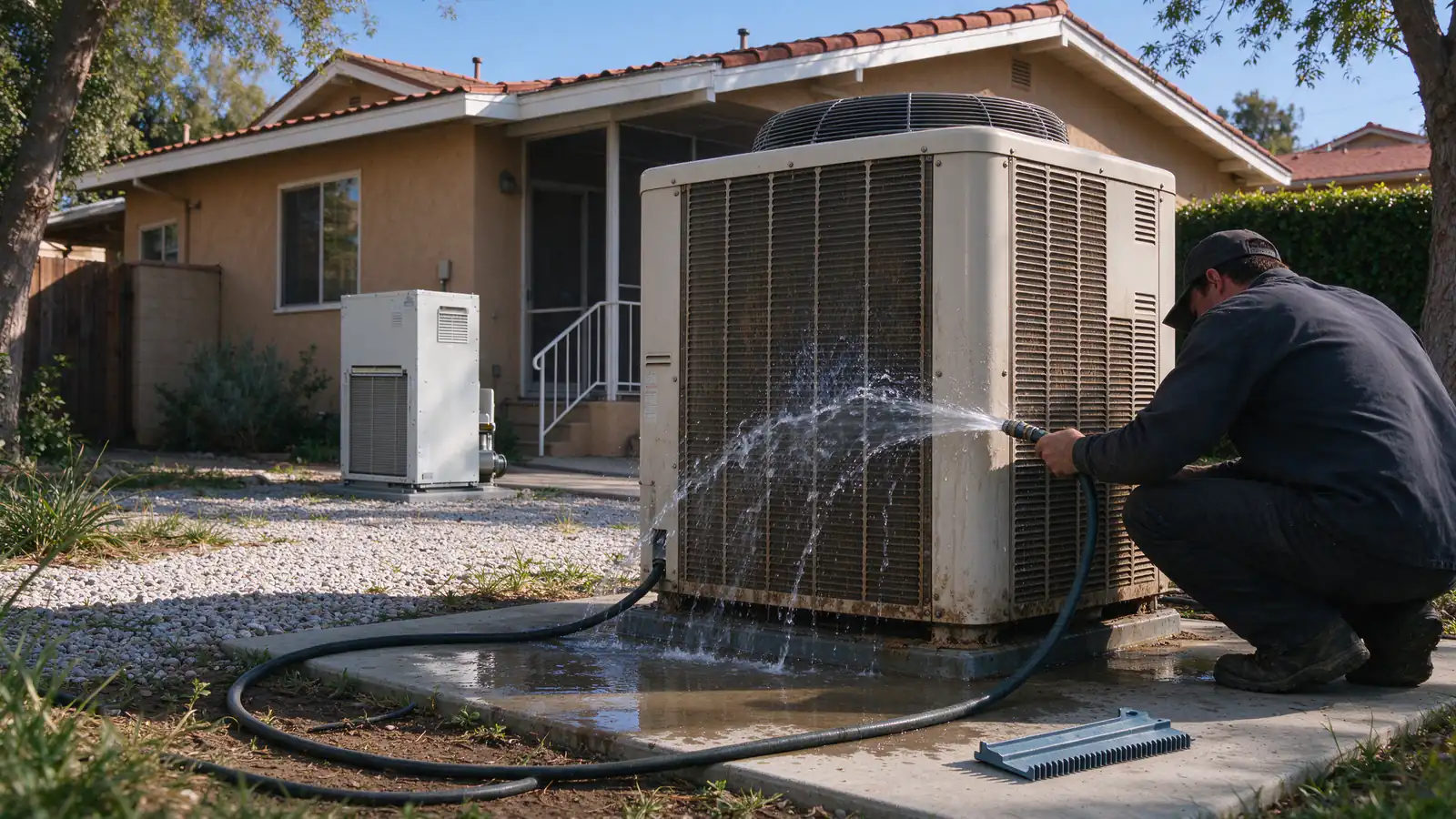
- The outdoor unit. We clean or check the coil, clear leaves and debris around it and look at the pad, the clearances and the disconnect.
- The airflow. We check the filter size and fit, the indoor coil where we can reach it and the airflow at the registers.
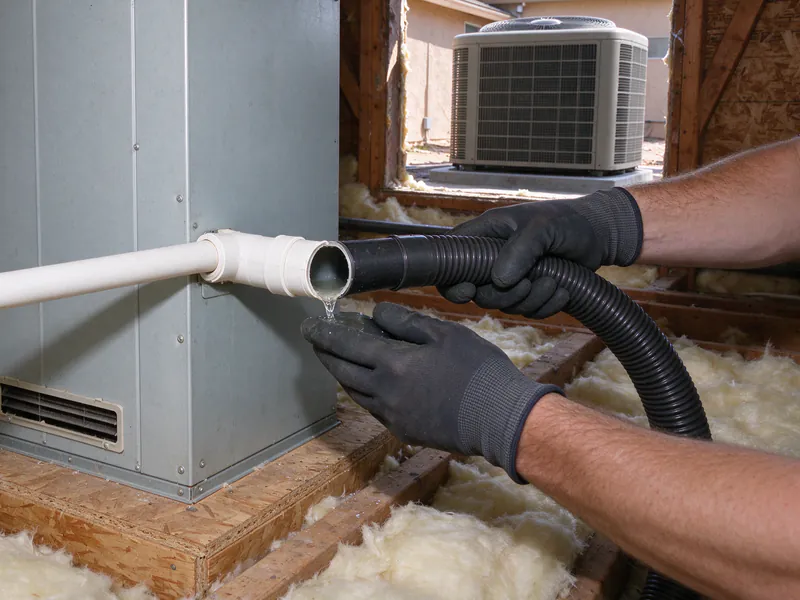
- The drain. We check the condensate drain, the pan and the float switch, because a blocked drain shuts the system off or leaks into the ceiling.
- The electrical parts. We check connections, the capacitor and the contactor for wear.
- Both modes. We run cooling and heating and measure how the system is running.
The maintenance checklist turns these checks into a calendar you can keep by the thermostat.
Why valley dust matters to your outdoor coil
The outdoor coil sheds the heat the system pulls out of the house. When its fins pack with dust, the system has to run hotter and longer to move the same heat, and the compressor and fan motor pay for it.
How fast a coil loads up depends on where the unit sits:
- Beside a dirt alley, a field or a busy road. It loads up faster than a unit in a sheltered backyard, so we suggest how often to clean the coil based on what we see, not a fixed schedule.
- Against a hot west wall or under a dryer vent. It has its own problems, and the placement guide explains why clear space around it matters.
Checking heat mode before the cold mornings
A spring visit is about summer, but a heat pump has two jobs. We also run the system in heat mode, so the reversing valve and the defrost controls are checked before winter rather than on the first cold valley morning.
We check that the electric backup heat comes on when it ought to and stays off when it is not needed. If the thermostat shows auxiliary heat often in winter, tell us. The controls guide explains what each setting means and which ones to leave alone.
What we check, and why it matters here
Each check on the list ties to something a Bakersfield summer or winter does to the system.
| What we check | Why it matters in Bakersfield |
|---|---|
| Outdoor coil | Valley dust and field debris cut its ability to shed heat on 100-degree afternoons |
| Filter size and fit | A dirty or poorly fitted filter cuts airflow and lets dust reach the indoor coil |
| Condensate drain and float switch | A blocked drain shuts the system off in the middle of summer |
| Capacitor and contactor | Long summer run times wear them; a weak part shows up on the meter first |
| Airflow at the registers | Low airflow leaves rooms warm and can ice the coil |
| Heat mode and defrost | Checked before winter, not on the first cold morning |
| Thermostat settings | Set for heat pump operation, with backup heat used only when needed |
What you can do between visits
Most of what keeps a heat pump healthy between visits is simple:
- Change the filter on schedule, and more often in a dusty stretch. Use the size the system was designed for; a more restrictive filter is not automatically better.
- Keep plants, toys and leaves at least a couple of feet clear of the outdoor unit.
- Keep the supply registers and the return grille open and clear of furniture.
- Write the date of each filter change on the box.
If a new filter turns gray within weeks, tell us; a leaky return can pull in attic dust. The filter and airflow article shows how to check yours, and the maintenance planner builds a reminder schedule.
What changes the plan
Maintenance is cleaning, checking and adjusting. If we find a failing part, we price that repair separately and you decide; it is never folded into the visit without asking.
Older systems with a history of problems may need a longer look, and we tell you before we start. Some things a maintenance visit cannot fix:
- A room that stays warm every afternoon. It often traces back to a crushed duct run or a return that is too small, not to a dirty coil. When the readings point that way, we say so, and the ductwork guide explains what the fix involves.
- A system that is new to you. If you are unsure how it was sized, the startup readings from the install help, and we ask for them on the first visit.
After the visit: your written note
You get a written note of the visit: what we saw, what we cleaned and adjusted, the readings we took and anything that needs a separate repair. Keep it with the system’s paperwork.
The next visit starts from those readings, so a part that is slowly drifting shows up before it fails. If the note points to a bigger question, such as a system near the end of its life, we talk it through with you and, when you ask, price a replacement beside the repair.