What can you check without opening anything?
A lot of heat pump trouble starts with something simple, and a few quick checks can save a wasted afternoon in a hot house. Everything below happens from the thermostat, a filter slot or the yard, never behind a panel.
- Thermostat mode and setpoint. Is it on Cool or Heat, not Off or Fan? Is the setpoint below the room temperature for cooling, or above it for heating? Replace the batteries if the display is blank or dim.
- The filter. A clogged filter chokes airflow. If you cannot see light through it, replace it with the same size.
- Registers and the return grille. Make sure they are open and not covered by furniture, rugs or curtains.
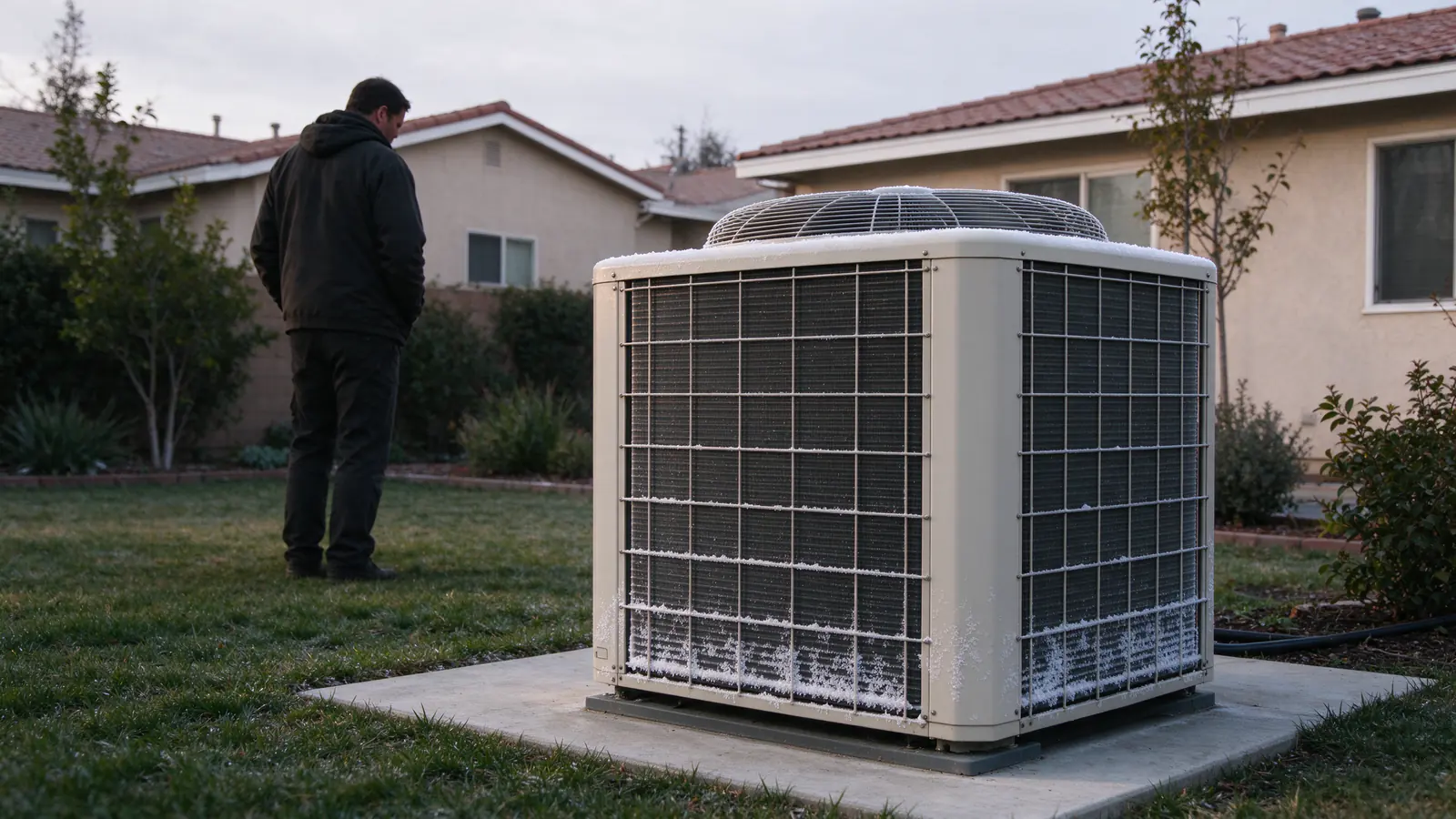
- The outdoor unit from the outside. Is the fan spinning? Is the coil buried in dust, weeds or leaves? Is anything leaning against it?
- The condensate drain. In cooling, the drain line outside drips. If it stays dry while the system runs hard, or there is water near the indoor unit, note it.
If the filter keeps clogging fast, our post on filter and airflow warning signs explains what that points to. If those all look right and the problem continues, it is time for heat pump repair. Your notes give us a head start.
Symptoms, safe checks and what we look at
Match what you notice to the safe check on the same row. If the check does not fix it, the last column shows what we test when we arrive.
| What you notice | What you can safely check | What we diagnose |
|---|---|---|
| Warm air in cooling mode | Thermostat mode, filter, outdoor fan spinning | Capacitor, contactor, refrigerant charge, reversing valve |
| House cools slowly on hot afternoons | Filter, registers open, outdoor coil dusty | Airflow, static pressure, coil condition, ducts in the attic |
| Ice on the copper line in summer | Switch cooling off and run the fan only; check the filter | Low airflow or a refrigerant problem |
| Outdoor coil iced for hours in winter | Watch for a defrost cycle with steam | Defrost controls, sensors, reversing valve |
| Water around the indoor unit | Look, note where it pools; leave the pan alone | Clogged drain, float switch, coil pan |
| Outdoor unit hums, fan does not turn | Switch off at the thermostat | Capacitor, fan motor, compressor start |
| Short cycles on and off | Thermostat location and batteries | Controls, sizing, refrigerant, safety switches |
| AUX heat runs most of the time | Note outdoor temperature and how long it runs | Lockout settings, heat pump capacity |
| Burning smell, buzzing, sparks | Switch off at the thermostat and call | Electrical fault |
What do the most common symptoms mean?
Warm air when it is 105 outside
On a hot Bakersfield afternoon, a system that blows warm air is usually not moving heat out of the house. The common causes:
- A failed capacitor that keeps the compressor or fan from starting.
- A dirty outdoor coil that cannot shed heat.
- A refrigerant problem.
All of these sit behind panels and need testing with meters and gauges. Our guide on cooling in Bakersfield summer heat explains how capacity and ducts change what you feel at the vent.
Ice in summer, frost in winter
Ice on the copper line or indoor coil in cooling mode points to low airflow or a refrigerant issue. Switch cooling off, leave the fan running to help it thaw, and call us. Do not chip at the ice. Frost on the outdoor coil in winter is normal until it stops clearing during defrost.
Water where it does not belong
Cooling pulls water out of the air, and that water has to drain away. When the drain clogs, a float switch shuts the system off or water spills near the air handler. Note where the water is, keep towels down, and leave the drain pan alone.
Noises that are new
Some sounds are normal: a whoosh when the reversing valve switches, the hiss of defrost, the hum of a running compressor. A grinding, screeching, rattling or loud clicking that is new is worth a call. Say when it happens: at startup, during the run, or when it shuts off.
The backup heat that never turns off
If the thermostat shows AUX for long stretches on mild days, the heat pump may not be carrying its share. See auxiliary heat and thermostat controls for what is normal and what is not.
What to tell us when you call
The more you can tell us, the better we can plan the visit:
- The thermostat mode, setpoint and the room temperature.
- What you noticed, when it started, and whether it comes and goes.
- Any sound, smell, ice or water, and where.
- The brand and model on the outdoor unit’s label, if you can read it without opening anything.
- The rough age of the system, if you know it.
What happens once we arrive?
We test the parts behind the panels, check refrigerant readings, measure airflow and find the cause. Before we replace anything, we tell you what it is and what it costs.
- Older system, large repair: our repair or replace guide and the repair or replace tool help you weigh it up.
- Stopped completely on a hot day: read what to do when a heat pump stops working and call us.
Regular maintenance visits catch many of these problems before they turn into a breakdown.