When cool is not the same as comfortable
You set the thermostat to 76, the system gets there, and the living room still feels close. Or the back bedroom stays warm and a little damp. That gap between the number and the feel has causes we can measure.
Cooling comfort comes from three things working together, and a heat pump handles all three in summer, as a central air conditioner would:
- The air temperature.
- How much moisture is in the air.
- How the air moves across you.
When one of them is off, the room tells you even if the thermostat does not. At Veranda Bakersfield Heat Pumps we check all three during a heat pump installation or a comfort call.
How does a heat pump take moisture out of the air?
As warm air crosses the cold indoor coil, the air cools and its moisture condenses on the coil and runs down the drain. The cooling takes minutes; the drying needs the coil to stay cold long enough for water to collect.
That timing is why runtime matters. A system that runs in long, steady stretches cools and dries. A system that runs a few minutes and shuts off cools the air but leaves much of the moisture on the coil, where it can evaporate back into the house.
What makes a room feel damp or uneven?
The system is oversized
A unit bigger than the house needs hits the setpoint fast and shuts off. Each short cycle cools without drying much. Sizing from a load calculation, using an industry method such as ACCA Manual J, matches capacity to the house. The sizing guide explains how that works and why square footage alone gets it wrong.
The fan is set to On
With the fan set to On, the indoor blower keeps running after the compressor stops. Air keeps crossing a wet coil and picks the water back up. In an attic system it also pulls heat from the ducts. For most houses we set the fan to Auto.
The airflow is off
Airflow that is too high moves air across the coil too fast to dry it. Airflow that is too low can make the coil too cold and starve far rooms of air.
Crushed ducts, a missing return or a closed door with no return path all change what each room gets. The ductwork and airflow guide covers how we measure it.
The house fights back
Sun on a west wall, a hot attic over the hallway and gaps around windows add heat and moisture faster than some rooms can shed it. That can be why one bedroom lags behind the rest.
What we check on a comfort visit
When you tell us a house feels clammy or uneven, we look at the causes in order, starting with the cheapest to change.
| Check | What it tells us | What it can lead to |
|---|---|---|
| Thermostat fan setting and schedule | Whether the fan is re-wetting the air | A setting change |
| Runtime and cycle length | Whether the system short-cycles | Airflow or control changes, or a sizing review |
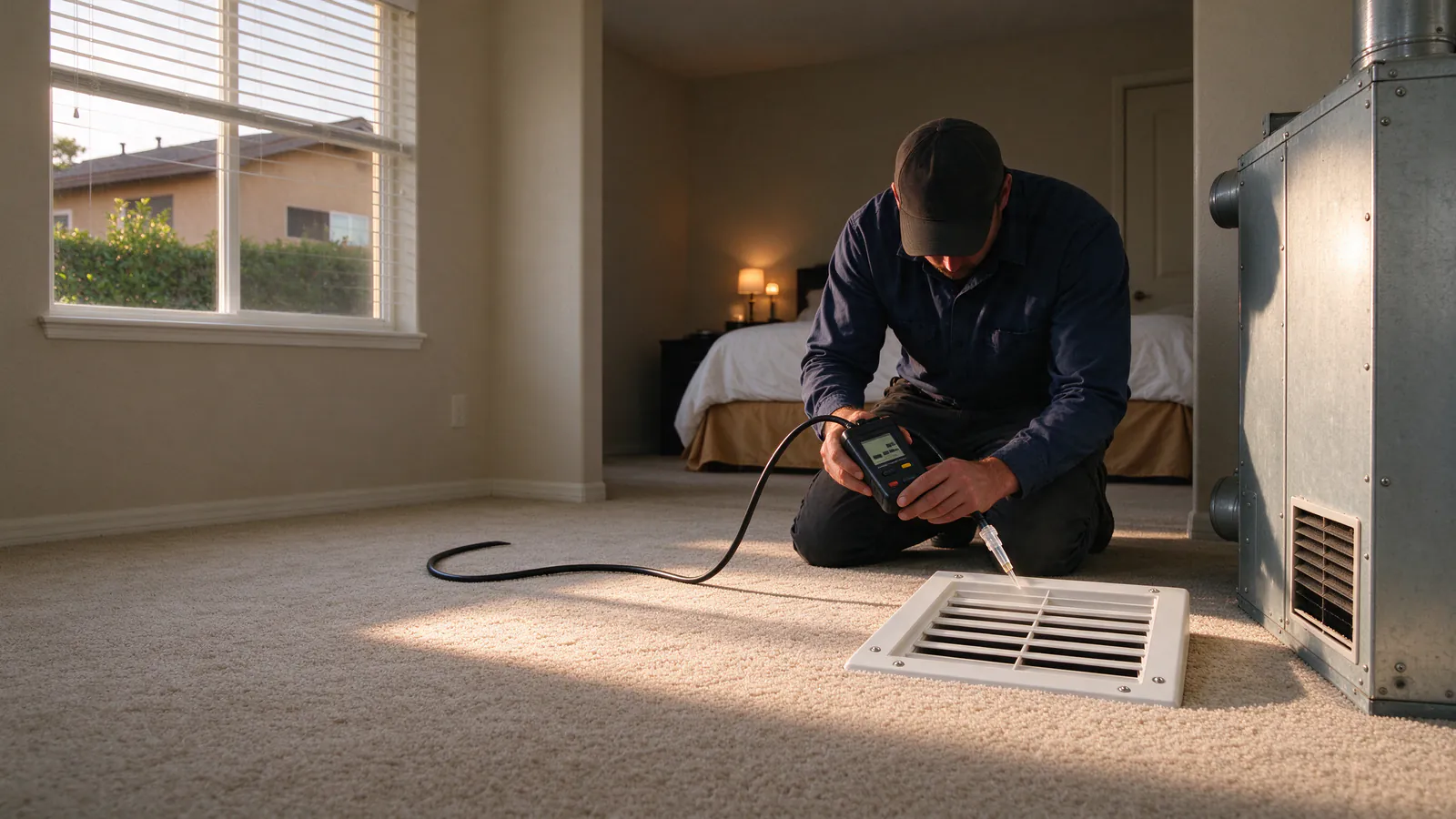
| Airflow at the blower and registers | Whether air is moving at the right rate | Fan speed adjustment, duct repair |
| Return air path | Whether closed rooms can breathe | An added return or transfer path |
| Duct condition in the attic | Whether air reaches the far rooms | Repair or replacement of crushed or leaking runs |
| Equipment size against the house | Whether capacity fits the load | A different size at replacement |
On a typical Shafter job, a 2,100 sq ft single-story house kept the same 4-ton size and gained a second return. That replacement came to $14,200 with two days on site. The fix can sit in the air path rather than in bigger equipment.
Does variable-speed equipment help with humidity?
It can. A variable-speed heat pump can run at low output for long stretches, which keeps the coil cold and the drain dripping. Some models and thermostats add a dehumidify mode that slows the fan further on muggy days.
Whether that is worth it in your house depends on your load, ducts and comfort complaints. The variable-speed guide explains the trade-offs.
What can I try before you come out?
A few changes cost nothing and tell us something either way:
- Set the thermostat fan to Auto for a few days and notice whether the house feels drier.
- Check the filter. A clogged one cuts airflow and makes the coil run too cold. Regular heat pump maintenance keeps the filter, coil and drain in shape.
- Open interior doors, or note which rooms feel worse with the door shut. That points us to a return air problem.
- Note the times of day the house feels worst. Late afternoon on the west side points to sun load; overnight points to runtime and fan settings.
If the system is making ice on the refrigerant lines, water is pooling near the indoor unit, or the system stops cooling, turn it off and call us. The repair symptoms guide explains which signs need a visit.
What about the 105-degree weeks?
In the hottest stretches, a correctly sized system can run for hours in the late afternoon. That is expected, and long runs are when it dries the air best. What matters is that it holds the setpoint and the rooms feel even.
Our guide to heat pumps in Bakersfield summer heat explains how capacity, design conditions and ducts decide how a system handles those weeks.
Replacing a system anyway?
Comfort complaints are the best place to start the conversation. Veranda’s typical range for a like-for-like ducted heat pump replacement is $6,500 to $15,500, set at the site visit and written into your estimate. Request an estimate and tell us which rooms bother you, or start with the system assessment.