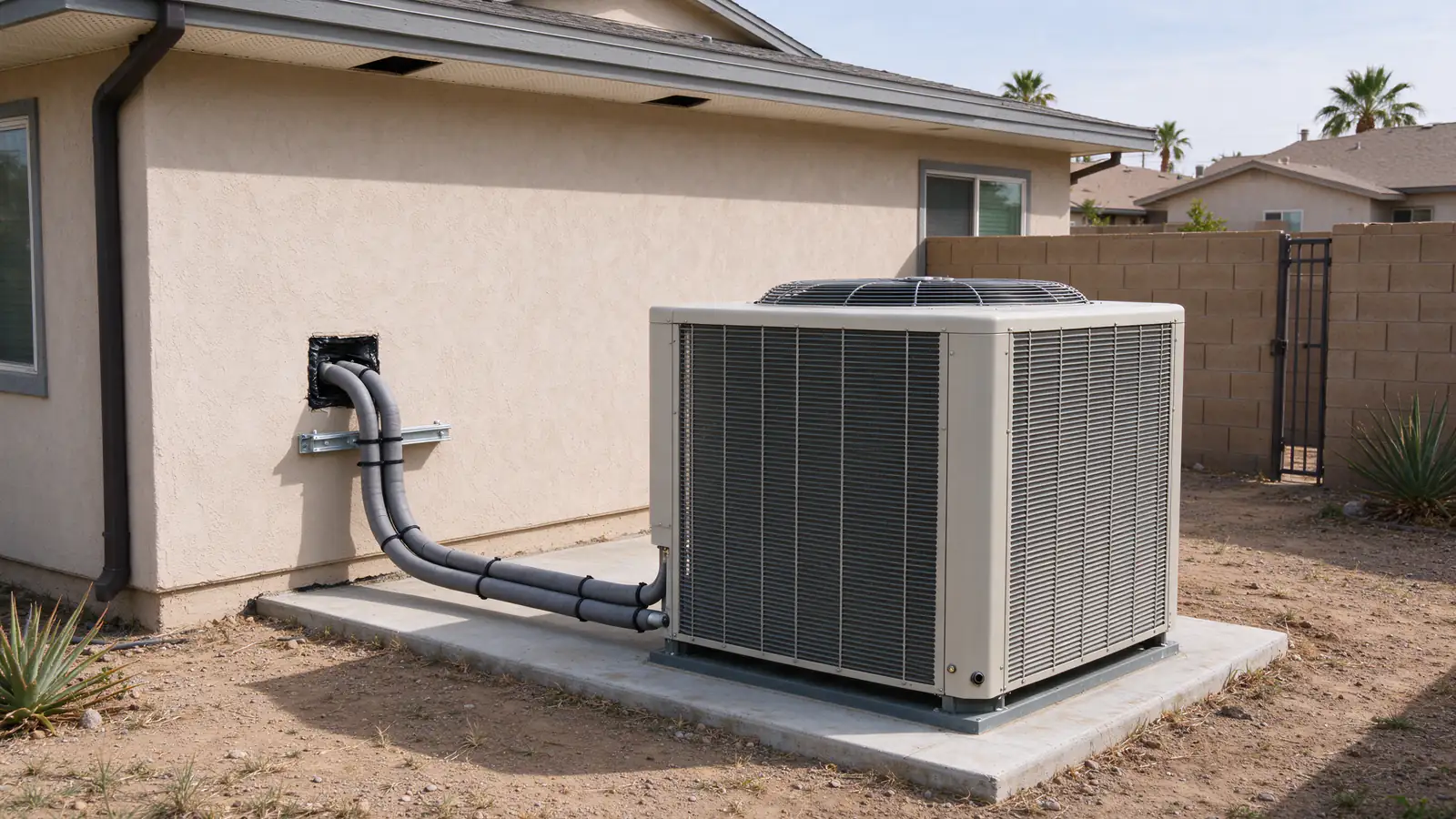
The side yard problem
A unit squeezed against a hot west wall breathes air hotter than the yard a few feet away, so it works harder to push heat out of your house on a 105-degree afternoon.
From Rosedale to Arvin, side yards can put the outdoor unit in that narrow strip, against stucco that has soaked up sun since noon. Some sit right under a dryer vent.
What decides where the outdoor unit goes
Clearances
Every outdoor unit comes with the manufacturer’s instructions for space on each side, above the top fan and in front of the service panel. Those numbers vary by model, so we read them for the unit we are proposing rather than reusing whatever the old one had. Too little space and the unit breathes its own hot discharge air.
Fresh air, not reheated air
We keep the unit clear of dryer vents, pool equipment exhaust and tight corners where hot air pools. When the only option is the west wall, we give it as much room as the yard allows.
Dust and debris
Valley dust and nearby fields load outdoor coils over a summer. A spot away from where leaves and grass clippings pile up makes the coil easier to keep clean. Our maintenance schedule guide covers coil cleaning.
A level, stable base
The unit sits on a level pad or a wall bracket rated for its weight. A unit that settles out of level can strain refrigerant connections and drain poorly.
Service access
We leave room to reach the service panel and the disconnect, so a future repair is not a fight with a fence.
How loud will it be?
Most of what you hear comes from three things: the outdoor fan, the compressor and the winter defrost cycle. How loud that feels depends on the model and, just as much, on where it sits.
Variable-speed equipment spends much of its time at low output, which tends to be quieter than a single-speed unit cycling on at full power. The variable-speed guide explains how that works. Here is how common spots compare.
| Spot | Sound | Heat and airflow | What we check |
|---|---|---|---|
| Under a bedroom window | Most noticeable at night | Depends on the wall | Whether a different wall works, and the model’s sound rating |
| Narrow side yard, west wall | Echoes between the house and the fence | Hot wall, limited air | Clearances on both sides, distance from the wall |
| Open back yard | Least echo | Best air supply | Line set length and the path back to the indoor unit |
| Near the property line | Can carry to a neighbor’s window | Usually fine | Any HOA rules you tell us about, and a spot that points the fan away |
Fences and walls reflect sound. A unit tucked into a corner can sound louder than the same unit a few feet out in the open. If quiet matters to you, tell us at the visit and we factor it into both the model and the spot.
Where does the water go?
A heat pump makes water in two places, and both need a planned path.
Indoor condensate in summer
When the system cools, the indoor coil pulls moisture out of the air. That water drips into a pan and runs out a drain line, and in a Bakersfield summer it carries water every day.
- The drain line. We run it to a proper discharge point with enough slope and a trap where the setup calls for one.
- An attic unit. We add a secondary pan under the unit and a float switch that turns the system off if water backs up.
A drain clogged with dust and algae backs water into the pan, so we check the line at every maintenance visit.
Defrost water in winter
On cold, damp mornings, especially during tule fog, frost can form on the outdoor coil. The system runs a short defrost cycle to melt it, and that water comes out the bottom of the unit.
- We set the unit high enough that the water drains away from the base.
- We keep it from sheeting across a walkway or soaking the foundation.
Can the unit move to a better spot when I replace it?
Yes, and a replacement is the cheapest time to do it. The old unit is already coming out, the new one often needs new refrigerant lines, and the electrical disconnect may change anyway.
Moving the unit adds line set length and some electrical work, and we price that as its own line in your heat pump replacement estimate. Reasons we suggest a move:
- The old spot is tighter than the new unit’s clearances allow.
- The unit sits under a bedroom window and you want quieter nights.
- It breathes air from a dryer vent or a hot corner.
- The pad has settled and the unit has tipped out of level.
If the old spot works, we keep it. We do not move a unit just to move it.
What about a unit on the roof or a wall bracket?
Some houses have no yard space for a unit. A wall bracket or a roof stand can work, but each one changes how sound travels into the house and how the defrost water drains. We check the wall or roof for support and plan a drain path before we suggest either.
What the inspector and the startup check
The inspector looks at clearances, the disconnect, the condensate discharge and how the line set is supported. Our startup checks come first and confirm the drain flows, the float switch trips and the unit has the airflow it needs.
- The permit guide explains how inspection works at your address.
- The commissioning guide lists what we measure at startup.
If you want to talk through placement at your house, request an estimate and we start in the yard.