Why is one room always hot?
It is late July, the thermostat in the hall reads 76, and the back bedroom on the west side feels like 84. The new equipment is not the problem. That room is not getting its share of the air.
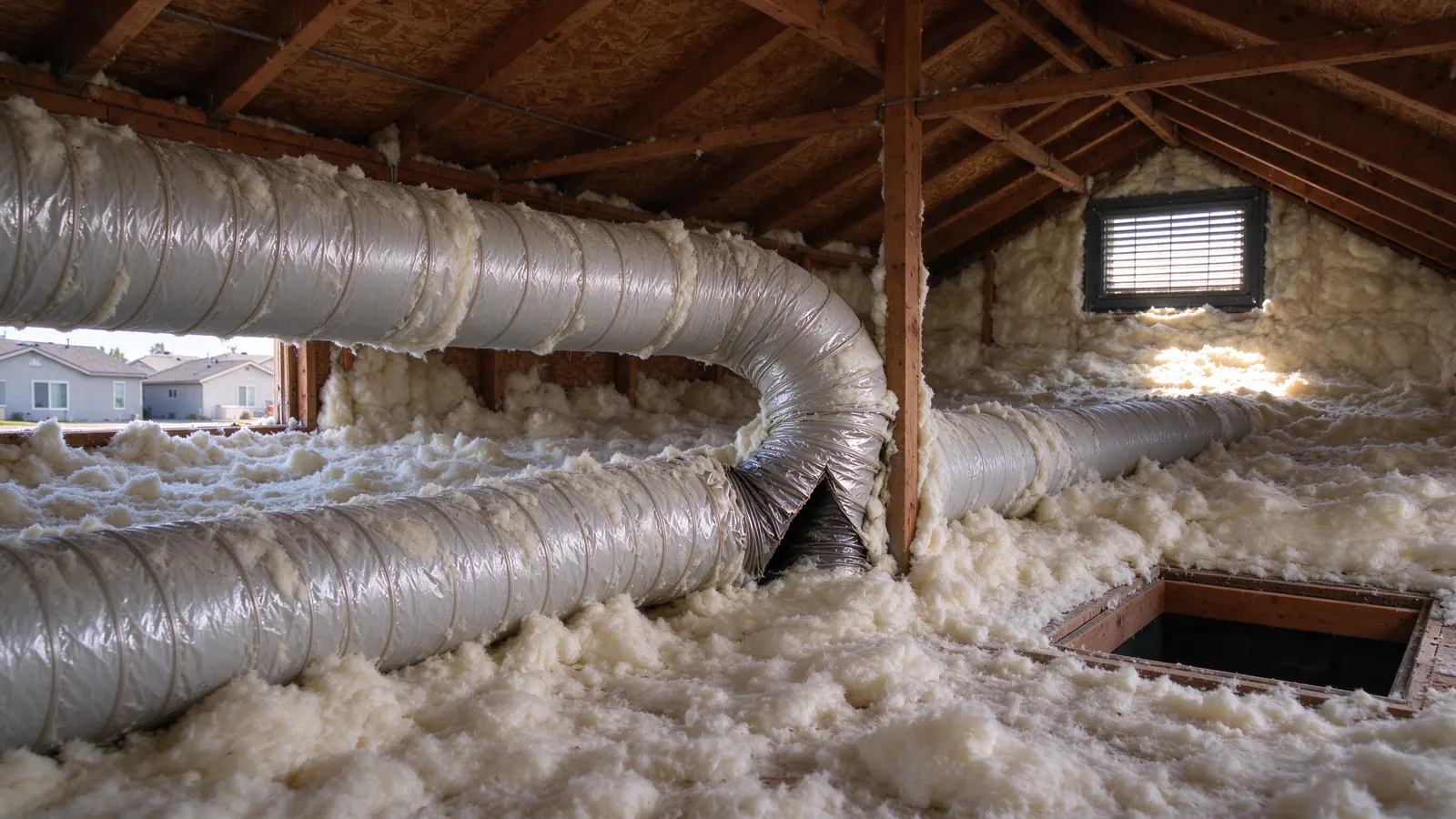
Uneven rooms often trace back to the path between the indoor unit and the vent: a supply run crushed under a stored box in the attic, a joint that pulled apart years ago, or a long run with too many bends.
At Veranda Bakersfield Heat Pumps, every heat pump installation we quote starts with the ducts as well as the equipment.
What does airflow have to do with a heat pump?
A heat pump moves heat by passing air across a refrigerant coil. If too little air crosses the coil, the system loses capacity, the coil can run too cold in summer and too hot in winter, and the compressor works harder for less result.
Heat pumps lean on airflow more than a gas furnace does. A furnace makes very hot air and can push a small volume of it; a heat pump makes milder air in winter, so it moves more of it. In summer both need plenty of air across a cold coil.
What do we look for in the ducts?
We work through the system from the indoor unit outward. This table matches what you notice with what is often behind it.
| What you notice | What is often behind it | What we check |
|---|---|---|
| One room always hot | Crushed, kinked or disconnected supply run | Trace the run in the attic, measure airflow at the vent |
| Weak airflow everywhere | Undersized return, dirty coil, high static pressure | Static pressure, return size, coil and filter |
| Whistling at a grille | Return too small for the blower | Return area and filter rack |
| Dust builds up fast | Leaky return pulling attic or wall air | Return joints and the platform or closet seal |
| Long, slow cooldowns | Ducts losing cold air into a hot attic | Insulation on the ducts, leaks at joints |
| Indoor unit is loud | Blower straining against restriction | Static pressure and blower setting |
Static pressure
Static pressure is the resistance the blower pushes against. We measure it on the supply and return sides with a manometer. When it runs higher than the blower is rated for, airflow drops no matter how good the equipment is.
Return air
Return air is the half of the system that gets overlooked. Some single-story ranch houses have only one central return in the hallway. That can work for a small system, but larger equipment often needs more return area.
A typical Shafter job shows it: a 2,100 sq ft single-story house kept the same 4-ton size and added a second return, $14,200 and two days on site. The extra return let the new system move the air it was sized for.
Leaks and insulation
Ducts in a Bakersfield attic sit in air that gets far hotter than the 100-plus degrees outside. Every leaky supply joint dumps cooled air into that attic, and every return leak pulls hot, dusty attic air into the system.
We look at joints, boots and the plenum connections, and at the insulation jacket on each run. If you are switching from gas heat, the conversion guide explains why furnace ducts sometimes need a larger return.
Does duct work happen before or with the new system?
With it, in almost every case. We size the new equipment from a load calculation, then check whether the ducts can carry the airflow that size needs.
If they cannot, the estimate lists the fix on its own line:
- A replaced run.
- A resealed trunk.
- A second return.
- A larger filter rack.
A typical Rosedale replacement ran this way. The 1,700 sq ft single-story ranch got a 3-ton system and one crushed supply run to the west bedrooms was replaced, all for $11,000 in one day on site. Without that run, the west bedrooms would have stayed hot under the new equipment.
Our guide on how heat pump sizing works explains how the load calculation sets the airflow target, and heat pumps in Bakersfield summer heat covers what that means on a 105-degree afternoon.
What can you check yourself?
You can do a few things without opening anything up:
- Change or check the filter. A packed filter acts like a closed door.
- Open every supply vent and keep furniture off the returns.
- Feel the airflow at each vent with the system running and note the weak ones.
- Look for dust streaks around ceiling vents, a sign of leaks at the boot.
- Leave the indoor unit’s panels on. The blower and electrical parts behind them are for us.
Our post on filter and airflow signs goes through more of what to watch, and a regular maintenance visit keeps the coil and filter from becoming the restriction.
How do we confirm the airflow after the install?
At startup we measure static pressure again, check the temperature change across the coil and confirm the blower setting matches the equipment and the ducts. We record those readings and give them to you.
Our commissioning guide explains each one, and our humidity and cooling guide covers how airflow affects moisture removal. If you want us to look at your ducts, request an estimate or call (661) 269-7726.