Why Bakersfield is hard on a heat pump
Your heat pump never gets a season off. It cools through 100-degree afternoons, heats on cold valley mornings, and does both in a side yard full of dust from fields, unpaved lots and the wind along Highway 99.
That dust settles on the outdoor coil like a blanket. The coil cannot shed heat as well, the compressor runs hotter, and the system works harder for the same cool air. Add ducts in an attic that bakes all afternoon, and small problems grow quickly.
Your part: the monthly and seasonal checklist
These jobs need no tools beyond a new filter and a garden hose, and none of them involve opening the equipment.
Every month in cooling season
- Check the filter. Pull it out of the return grille or filter slot and hold it up to the light. If you cannot see light through it, replace it.
- Look at the outdoor unit. Clear weeds, leaves, grass clippings and anything stacked against it. Keep about two feet clear on all sides.
- Watch the condensate line. Find where the drain line ends outside or at a drain. On hot days you will see it dripping. If it stays dry while the system runs hard, or you see water near the indoor unit, call us.
Every season change
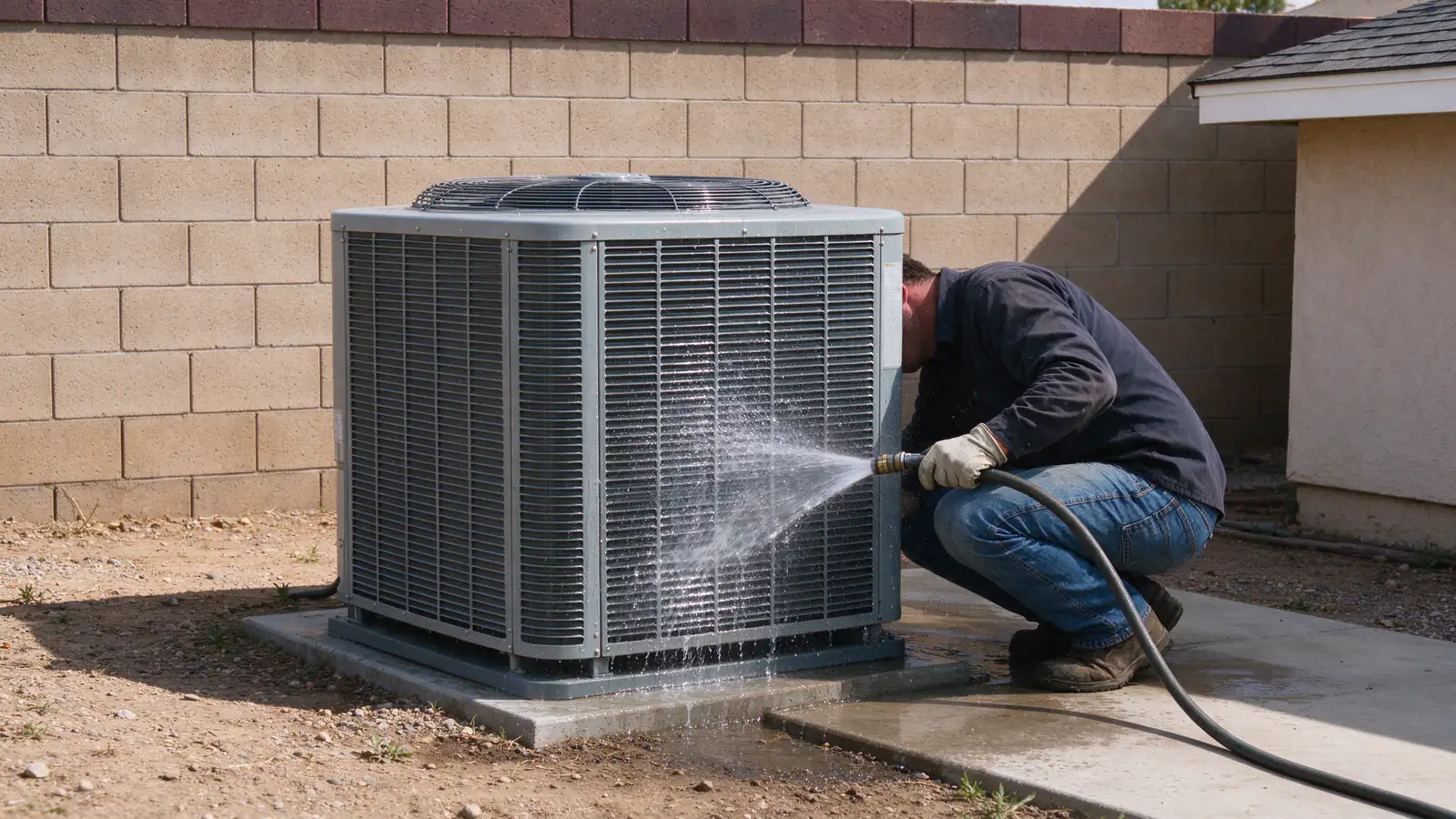
- Rinse the outside of the coil. With the system switched off at the thermostat, use a gentle hose spray from the outside of the unit to wash off loose dust.
- Test both modes. Run cooling for a few minutes in spring and heating in fall before you need them, so a problem shows up on a mild day.
- Check the registers. Make sure supply registers and the return grille are open and not blocked by furniture or rugs.
Which filter do you buy?
Buy the size printed on the edge of the filter you have now, and match the type the system was set up for.
- Denser is not always better. A very dense filter catches more dust but can choke airflow on a blower that was not set up for it.
- On time beats thick. In a dusty valley summer, a standard pleated filter changed on time usually does more good than a dense one left in too long.
If you are not sure what your system takes, ask us at the next visit and we will note it on your written report. Our post on filter and airflow warning signs shows what a struggling filter looks like.
Our part: what a maintenance visit covers
At a maintenance visit, we work through the system in order and write down what we see.
| Area | What we check |
|---|---|
| Outdoor coil | Clean the coil, straighten damaged fins, clear the base |
| Indoor coil and drain | Inspect the coil, clear the condensate drain, test the float switch |
| Electrical | Test capacitors and contactor, tighten connections, check voltage and current |
| Refrigerant circuit | Read pressures and temperatures against the equipment’s expected values |
| Airflow | Check the filter, blower and static pressure |
| Heating side | Test the reversing valve, defrost controls and backup heat strips |
| Thermostat | Confirm settings, staging and the outdoor lockout |
If something needs repair, we tell you what it is and what it costs before we replace anything. Nothing gets swapped out without your go-ahead.
Spring and fall: what changes between the two visits
Before summer
The spring visit focuses on cooling. We clean the outdoor coil thoroughly, test the capacitor and contactor that take the most strain in summer heat, check the refrigerant readings under load, and clear the condensate drain before it starts carrying water every day. Our guide to humidity and cooling explains why the drain and airflow matter for comfort.
Before winter
The fall visit looks at heating. We test the reversing valve, confirm defrost runs, check that backup heat strips stage on when called, and make sure the outdoor lockout matches the system. A system that heated fine last winter can still have a weak part this one.
Ducts: the part of the system you cannot see
Your attic ducts bake all summer in heat well above anything in the living room. Over twelve-plus summers, tape dries out, connections loosen and flex runs sag or get crushed.
- What a leak does. A gap in the attic pulls hot, dusty air into the system.
- What we check. During a visit we look for airflow trouble at the registers and in the readings, and tell you if the ducts need a closer look.
Our ductwork and airflow guide covers what that inspection involves.
When maintenance turns into a bigger question
When the same repairs keep showing up in the visit notes, or the readings drift each season, it may be time to weigh repair against replacement. Regular visits give you that record of how the system is aging.
- Weighing the decision: our repair or replace guide walks through it.
- Keeping your own schedule: the maintenance planner tool helps.
- Something seems off between visits: our repair symptoms guide lists the safe things to look at before you call.
When you are ready to set up a visit, contact us and we will find a time.