Your AC is failing and the furnace is not far behind
Replacing them one at a time means paying twice and keeping two systems. Veranda Bakersfield Heat Pumps takes out the gas furnace and the old AC and puts in one heat pump that does both jobs.
It cools like any air conditioner through a 105-degree week, and in a Bakersfield winter it rarely has to work hard to heat the house. If you are still weighing a new furnace and AC against a heat pump, the comparison guide lays them side by side.
What does a furnace and AC conversion cost?
Veranda’s typical range for a furnace-and-AC conversion is $8,000 to $15,500. The panel decides more of the final number than anything else, and you get it in a written estimate once we have seen the house.
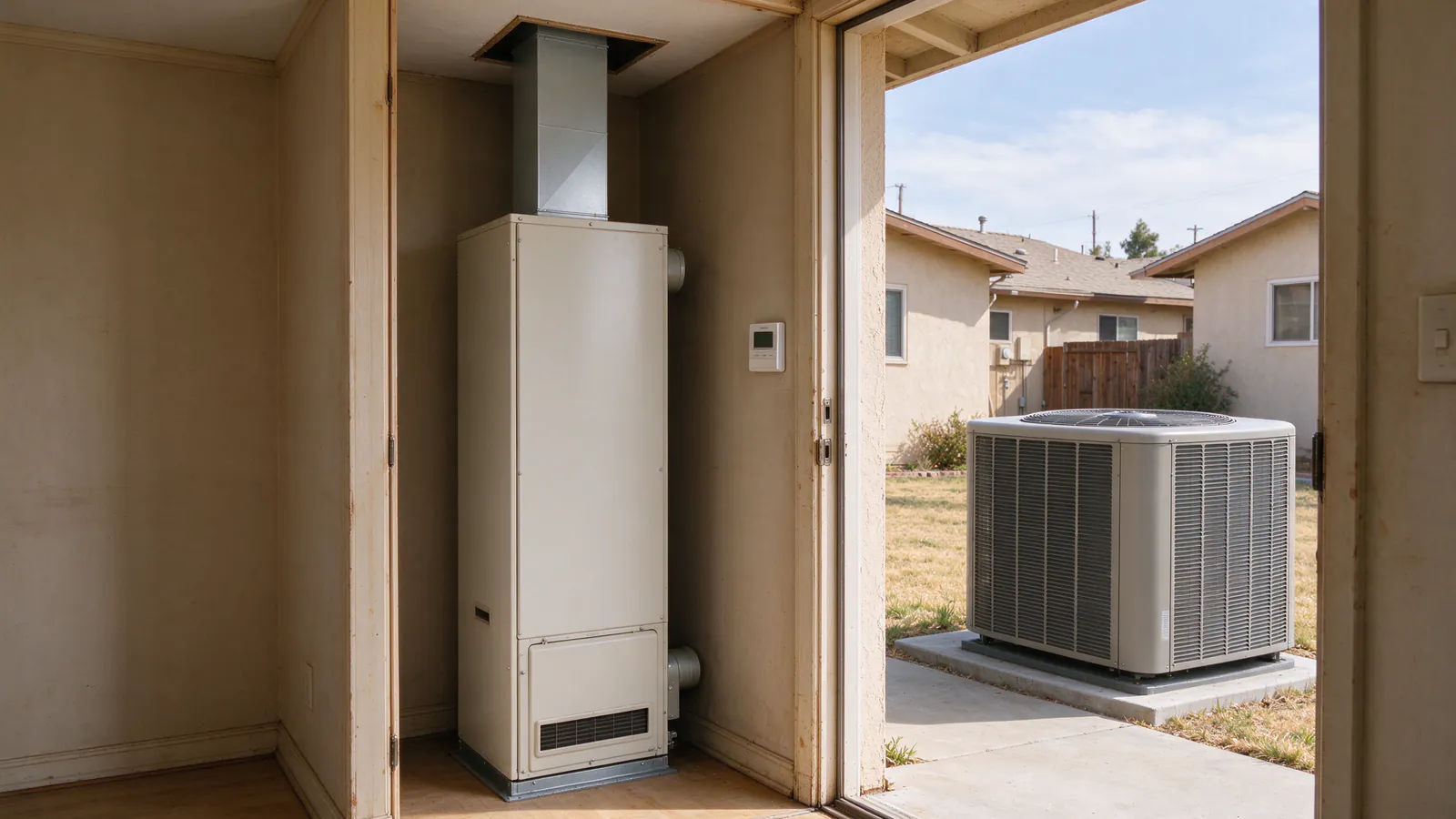
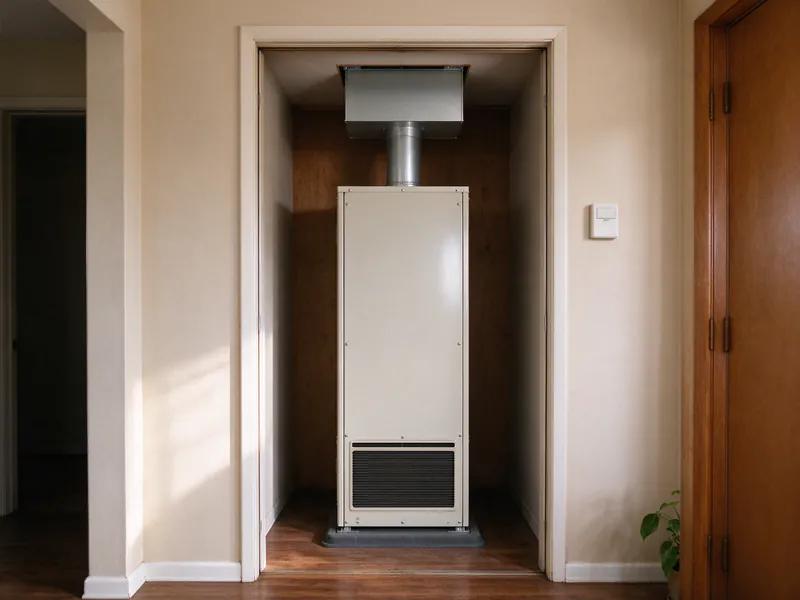
The Oildale house profiled on this page sits in the lower half of that range: 1,300 sq ft from the 1950s, an air handler in the hall closet, a panel with two open spaces for the new 240-volt circuit and the furnace gas line capped. It came to $12,400 with 2 days on site.
What we check before we quote a conversion
Three things decide a conversion: the panel, the closet and the gas. We look at those first, along with how the house feels in both seasons, and the readiness check helps you gather the answers beforehand:
- Panel room for a 240-volt circuit. The air handler and its heat strips need one. Open spaces and spare capacity keep the job simple; a full or older panel moves the price most.
- The furnace closet or attic. Whether the air handler fits where the furnace stands, with room to change the filter and service it.
- The gas appliances. Which ones stay on gas, so only the furnace line gets capped.
- The heating and cooling load. Sized from the house, its windows, insulation and attic, not from the furnace label.
- The ducts and return. Ducts that carried furnace heat can often serve the heat pump, once we have checked them for leaks, crushed runs and a return large enough for the new airflow.
What changes when the furnace comes out?
The furnace and the old outdoor unit leave, the gas line to the furnace is capped, and a matched air handler stands where the furnace stood.
- The heat pump goes on a pad outside, often in the old AC’s spot if the clearances allow.
- New refrigerant lines connect the two halves.
- The 240-volt circuit runs from the panel to the air handler.
- The thermostat is replaced or set up for heat pump operation.
- Sound ducts stay; a loose return connection or a crushed run is fixed on its own line.
The conversion guide covers each step and what changes in the closet or attic.
Will a heat pump keep the house warm on a cold valley morning?
Yes. A heat pump moves heat from the outdoor air into the house, and it keeps working on cold valley mornings, tule fog included.
Now and then the outdoor unit runs a short defrost cycle, and you may see vapor rise from it; that is normal. Electric heat strips in the air handler help during defrost and on the coldest mornings, and the controls guide explains what the thermostat shows when they run.
If your furnace is still young
If your furnace is much younger than your AC, a heat pump paired with that furnace, called dual fuel, is another route. The dual-fuel guide explains how it works; ask us whether it fits your house.
What sets your price inside the range?
A house with panel room for the new circuit, sound ducts and a closet the air handler fits sits near the bottom of the range. These push it up:
| On the visit we find | What it adds to a conversion |
|---|---|
| A full or older panel | A panel upgrade, the largest single addition |
| A house that needs more capacity | Bigger equipment, set by the load calculation |
| Leaky ducts or an undersized return | Duct repair or a new return on separate lines |
| A closet the air handler cannot use | A new location, longer lines or closet work |
| You choose higher-efficiency or variable-speed equipment | A higher equipment price for steadier running |
| What you want done with the gas service | Capping one line, or more if no gas appliances remain |
The electrical guide explains what we look for in the panel.
What the conversion estimate lists
Every conversion estimate lists these items, each on its own line:
- The heat pump and air handler by model number, with the size and why we chose it
- Removal and disposal of the furnace and the old outdoor unit
- Capping the furnace gas line
- The new 240-volt circuit and any panel work
- Any duct or return work
- The thermostat, the permit and inspection, and the startup checks
Before filing the permit we confirm which office covers your address; the permit guide covers what gets inspected.
Rebates for a conversion turn on your address, your utility, the equipment and whether the program has funding. We share what we know at the visit, and an approved rebate appears on its own line, never before. The incentives guide lists what to check.
After the switch to one system
We start the system in cooling and in heating, check the refrigerant charge, the airflow across the coil, the heat strips and the drain, and write down what we measured for your paperwork. We also show you the filter size and when to change it.
Then we walk you through the new thermostat, including what auxiliary heat and defrost look like on a cold morning, so neither one surprises you in January. One system means one spring maintenance visit instead of a furnace check and an AC check. If you live north of the Kern River, our Oildale page covers the area.