Shafter houses come in two kinds
Shafter has older blocks near downtown and newer subdivisions on the edge, and the two need different first questions. At Veranda Bakersfield Heat Pumps, we ask which kind of house yours is before anything else.
Shafter sits about 17 miles northwest of Bakersfield on the Central Valley Highway, with Minter Field a few miles east of downtown. U.S. Census Bureau figures put about four in ten Shafter homes before 1980, and about four in ten built since the turn of the century.
- In an older house, we ask whether the panel, the ducts and the return can carry a heat pump.
- In a newer one, we ask whether the size the builder chose was ever right.
Both end up at the same place: a system matched to the house, and air that actually reaches the rooms.
Why size alone does not fix a warm room
Because the system may be big enough already. When a bedroom stays warm at five in the afternoon, the air is often not getting around the house, because the return cannot pull enough air back to the air handler.
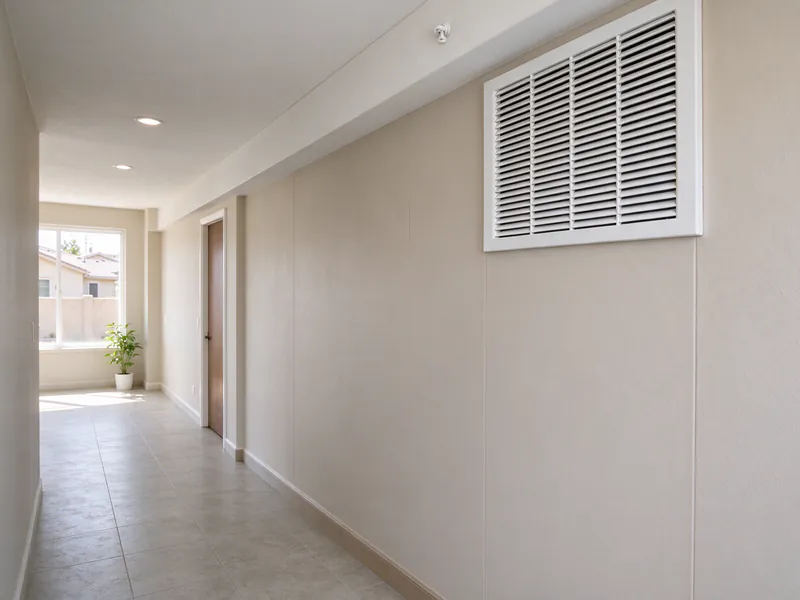
A starved return shows itself:
- The filter grille rushes or whistles.
- The hallway near it feels warm.
- The system runs for hours without the far rooms catching up.
Putting a bigger unit on the same return makes it louder without making those rooms cooler.
We run a load calculation from the house using an industry method such as ACCA Manual J, and we measure airflow and static pressure. The two numbers together tell us whether the fix is size, return, ducts or all three. The sizing guide and the ductwork and airflow guide explain the method.
A Shafter job where the size stayed the same
One Shafter replacement gives a fair picture. A 2,100 sq ft single-story house had a 4-ton system that was wearing out and rooms that never kept up.
The load calculation said 4 tons was right, so we kept the size. What the house lacked was return air, so we added a second return. The job came to $14,200 and took 2 days on site.
Can an older in-town house take a heat pump?
Usually, if the panel has room. In the blocks near downtown, a house may still have a gas furnace and a separate AC condenser, and one heat pump can replace both, with the gas line capped at the old furnace.
Shafter winters are mild with cold valley mornings, which is easy work for a heat pump. What decides the job is the panel: a conversion needs a 240-volt circuit for the air handler and a disconnect at the outdoor unit.
| What the panel shows | What happens |
|---|---|
| Room for the circuit | The job stays simpler |
| Full or old | We tell you on the visit and price the upgrade on its own line |
Veranda’s typical range for a furnace-and-AC conversion is $8,000 to $15,500, and our conversion page covers what is included.
How the outdoor unit fits an older lot
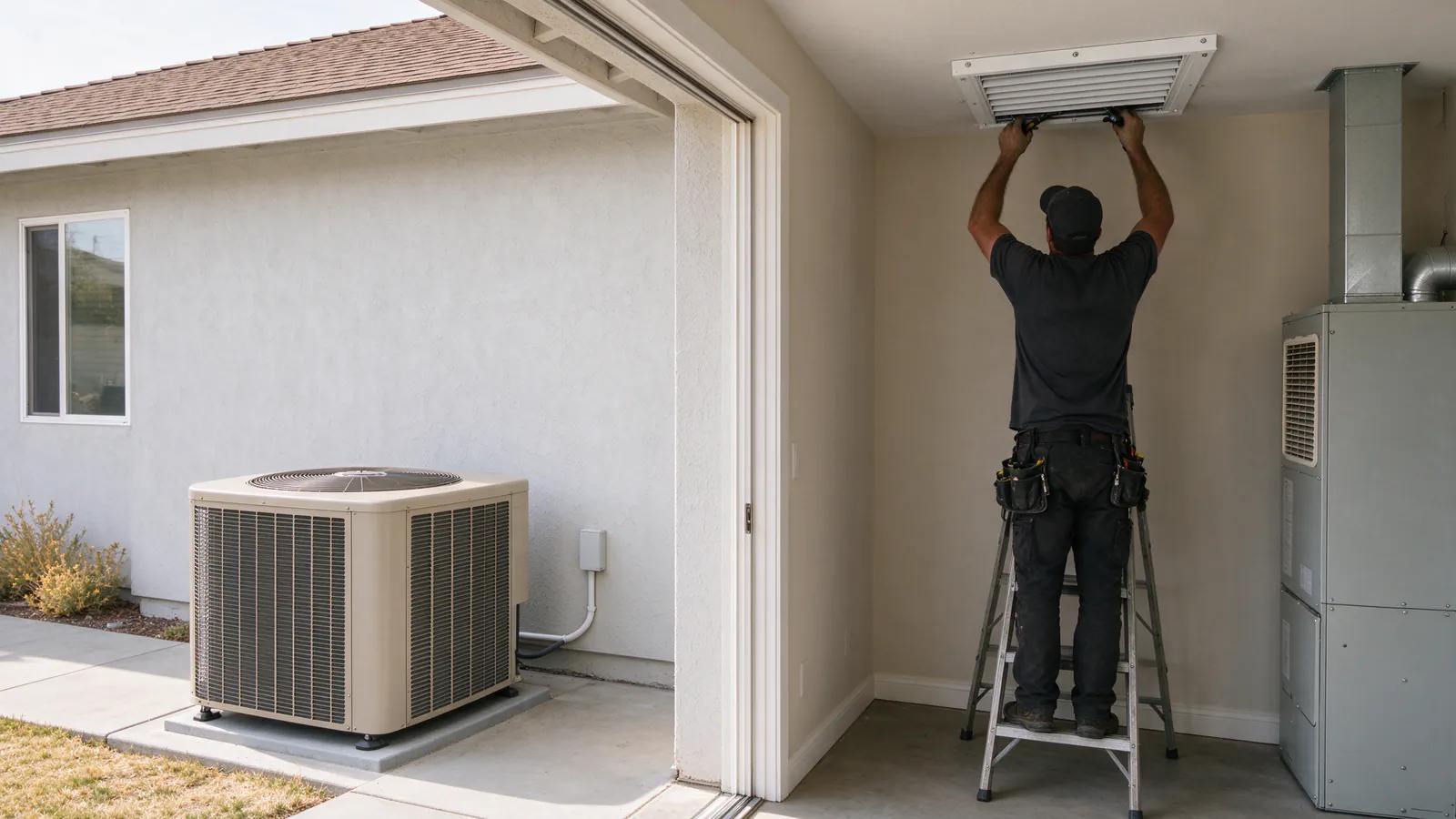
With some care. Older in-town lots can put the condenser in a narrow side yard, against a west wall or under a dryer vent, and a heat pump runs in both seasons, so the spot matters more than it did for an AC.
We place it with the clearances its instructions call for, where the condensate can drain, and away from bedroom windows where the lot allows.
What if my house is in a newer subdivision?
Then the system wearing out may be the first one your house ever had. The ducts sit in the attic, and the outdoor unit sits wherever the builder put it.
We test the attic runs, check the size against the house and look for a better outdoor spot if the current one sits against a hot west wall. The heat pump replacement page explains the full job.
What happens on install day in Shafter
A replacement with a second return runs over two days. We take out the old system on the first day and start the new one at the end of the second.
- Day one: we recover the refrigerant, remove the old equipment, set the new air handler and outdoor unit, and run the new refrigerant lines.
- Day two: we cut in the new return, connect and seal the ducts, finish the electrical work and start the system.
Startup is where the plan gets proved. We check the refrigerant charge, measure airflow and static pressure with the new return in place, run both heating and cooling, and confirm the condensate drains. You get the startup readings, and we show you the thermostat. The commissioning guide lists every check.
What sets the price in Shafter
Veranda’s typical range for a like-for-like ducted heat pump replacement is $6,500 to $15,500. Five things on the visit decide where your house falls:
| What we check | Pushes the price toward | Why |
|---|---|---|
| Load calculation | Lower if the size holds | Same size can reuse more of the setup |
| Return air | Higher if a return is added | New grille, duct and startup checks |
| Attic ducts | Higher if runs are replaced | Each run is its own line |
| Panel | Higher if it needs an upgrade | Priced separately so you can see it |
| Outdoor placement | Higher if the unit moves | Longer line set, new pad and wiring |
The replacement cost guide goes through each factor.
Who handles the permit and the upkeep?
We handle both. The permit office depends on the address; we check it before the permit is filed, and the permit is a line in the written estimate. PG&E supplies electricity in Shafter and SoCalGas supplies gas.
Valley dust loads outdoor coils, so we set the unit where every side can be reached, and a yearly maintenance visit keeps it clean. If your system is newer and simply struggling, start with heat pump repair. A diagnosis costs less than a system you do not need yet.